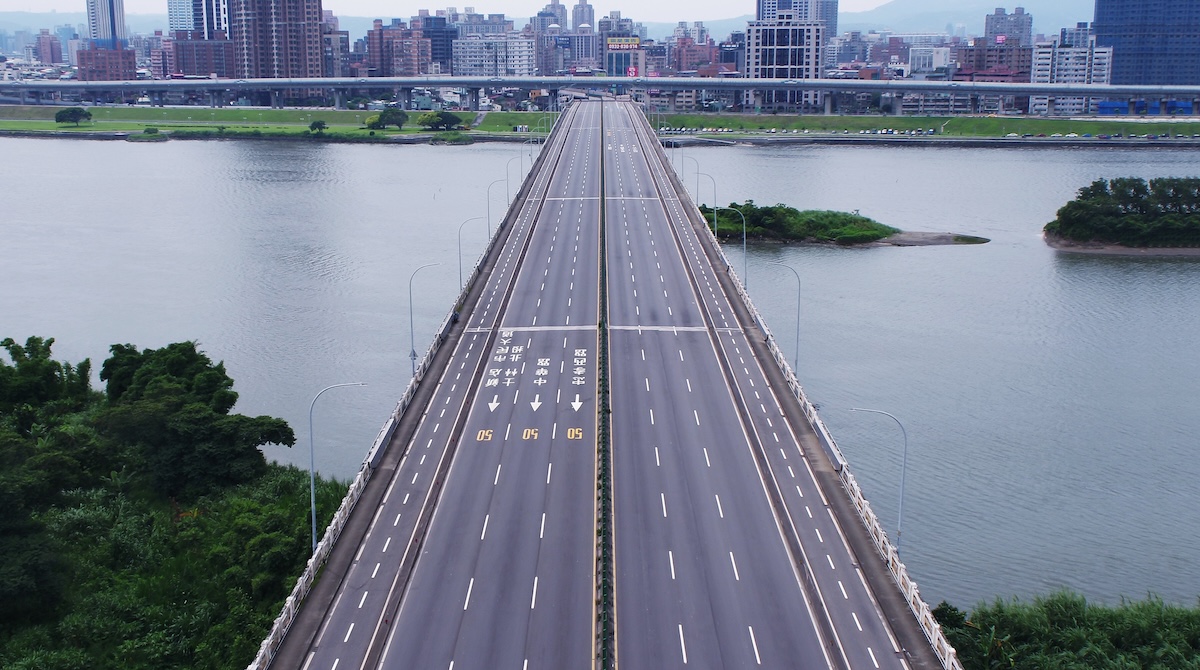
“When I talk about ‘everyday war,’ I want to talk about life during the war, but also the war that we encounter in our lives every single day. War is not just about the physical gunfire, but also about, for example, the unequal distribution of capitalism, natural disasters, climate change, the pandemic … and everything that we encounter every day. So, in some way we are already in a state of war every single day.”
– Yuan Goang-Ming
Widely recognized as a pioneer in Taiwan’s new media art scene, Yuan Goang-Ming is celebrated for his starkly poetic video and installation works reflecting the fragmented and surreal nature of contemporary life. Everyday War is based on the critically acclaimed exhibition the artist presented at the 60th Venice Biennale in 2024. At Wrightwood 659, the large, immersive installation will send an eerie soundscape throughout the galleries. Audio drawn from the artist’s previous works, including Prophecy (2014), will merge and collide. Glasses and dinnerware on a kinetic table will shake in response to an unseen threat while a home will be subjected to the unpredictably intrusive nature of war.
Yuan Goang-Ming: Everyday War is organized by Halsted A&A Foundation at Wrightwood 659, Chicago. It is adapted from the exhibition presented at the Taiwan Pavilion of the 60th Venice Biennale, curated by Abby Chen, Curator of Contemporary Art at the Asian Art Museum, San Francisco.
Bridging personal experience and universal themes, Yuan’s films evoke precarious everyday conditions, from the stillness of empty streets during Taiwan’s annual air raid drills to the chaotic aftermath of an explosion detonated in a living room. He transforms intimate domestic spaces into powerful metaphors for widespread instability, capturing the tenor of globally turbulent times we are all witnessing. In addition to the six works presented in Venice, a small drawing titled What Lies Beyond Us? has been added to this iteration of the exhibition. The sketch takes inspiration from a monochromatic historical photograph, dated 1951 and featuring U.S military officials witnessing a nuclear test explosion from Adirondack chairs.
“Yuan’s work speaks to the precise moment we’re living in,” says Curator Abby Chen. “His depiction of personal spaces as sites of both comfort and conflict resonates with audiences worldwide, particularly as we navigate increasingly unsettled times. At the same time, this exhibition is deeply personal, the manifestation of his experiences as a second-generation war refugee and a reinterpretation of the legacy of trauma as both a son and a father.”


