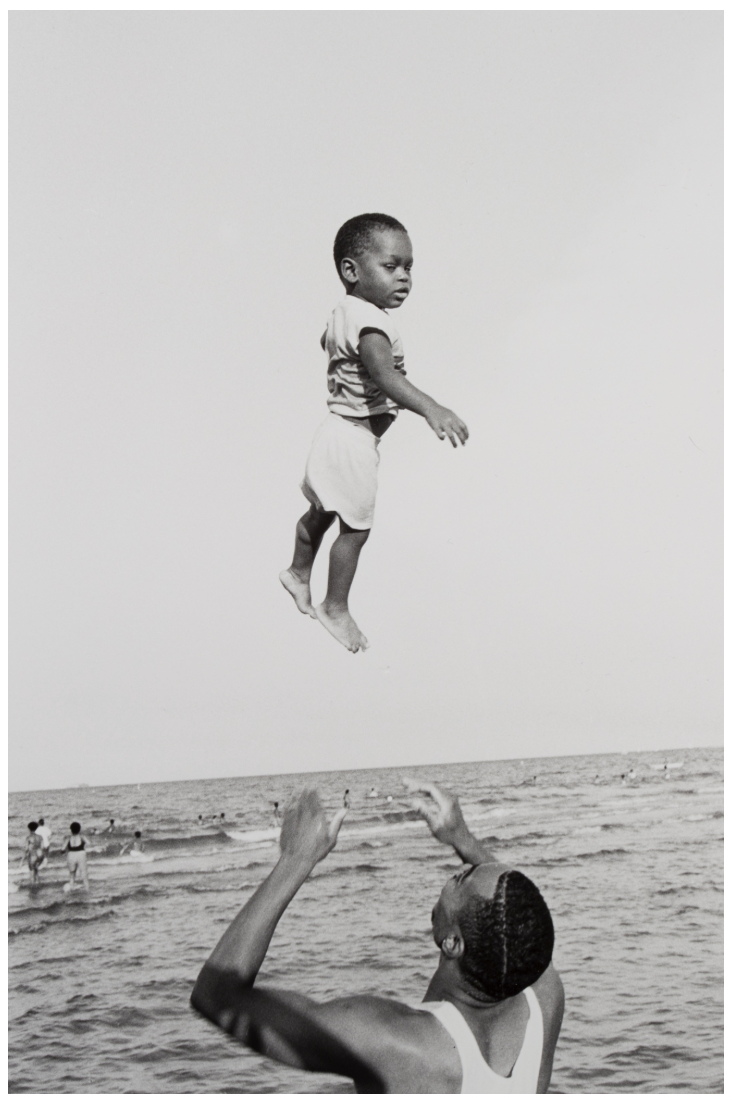
What if Emmett Till lived? What if he had returned home still a child, alive and free? If Emmett Till Lived… is an exhibition and a civic invitation. The very statement invites a range of questions, a reckoning with the past, and a probing investigation of the current state of American life. This exhibition, and the invitation it offers to viewers, creates a collective arena to consider how freedom has been secured on American ground.
In 1955, Emmett Till, then fourteen years old, had traveled from Chicago to the Mississippi Delta region to visit his family during the summer, bought candy at Bryant’s Grocery and Meat Market, and was accused of whistling at a shopkeeper, a white woman working in the store. The accusation violated the racial caste system of Jim Crow rule that kept the economic, civic, and social subordination of black Americans the law of the land. Days later, the woman’s husband, Roy Bryant, his brother-in-law John William (J.W.) Milam, and one other man kidnapped Till from the home of his uncle Moses Wright near Money, Mississippi, and took him to a barn where they brutally tortured, mutilated, and killed him with the force of a mob lynching. Till’s body was thrown in the Tallahatchie River weighed down by a 75- pound cotton gin fan wrapped around his neck with barbed wire. The next month, Bryant and Milam were acquitted by a jury in Sumner, Mississippi. In January 1956, they confessed to the murder in Look magazine with pride. Till’s lynching was a warning: in Mississippi, Jim Crow rule would remain.
In 2017, the Till case was reopened by the Justice Department when new information emerged that the woman who had accused him of whistling at her had recanted. While her statement did not lead to any persecution after the FBI investigation—the statute of limitations had run out and perjury in a state court is not a federal crime—it did result in the Justice Department’s statement that “the government does not take the position that the state court testimony the woman gave in 1955 was truthful or accurate.”
There were many Tills, yet his murder was the one made visible to all. “Let the world see what I’ve seen,” his mother, Mamie Till-Mobley said. Till-Mobley asked for an open casket funeral for her son in Chicago and 100,000 attended—the largest civil rights event and the most impactful for mass mobilization to date in the United States.
Racism had been clear; Till’s death gave many new resolve coming as it did a year after the 1954 Brown v. Board of Education Supreme Court case that legally outlawed segregation. Till’s murder became the event that shook the consciousness of the nation enough to enforce it.
“We were the Till generation,” Congressman John Lewis said, echoing the sentiments of many. When Rosa Parks explained why she refused to give up her seat in the front of the bus to a white customer, launching the Montgomery Bus Boycott, she said, “I thought of Emmett Till and I couldn’t go back.”
Picture it. What would it have required for Till to live? If Emmett Till Lived… honors Till and the history born of his sacrifice. The show—drawn entirely on work in the collection of the Museum of Contemporary Photography at Columbia College Chicago—imagines what could have come in his life: photographs of different restaurants pay homage to the last meal Till’s mother, Mamie Till-Mobley, packed for him before he left Chicago, others show his favorite pastimes, meditate on the love he might have experienced, on days spent enjoying life in Chicago, on the playground, at the beach, attending prom, living free. There are images of railway lines that mark his one-way trip from Illinois to Mississippi and the travels that might have one day taken him around the world. There are photographs of the full range of life events Till missed: from the Chicago Bulls as a cultural phenomenon to the love we imagine he might have known as he grew into a man, to the election of Barack Obama and the extended Civil Rights protest and movement today.
The show deliberately draws upon the work of a vast array of photographers who emblematize the full range of American life including: Hanif Adbur-Rahim, Tom Arndt, Laylah Amatullah Barrayn, Uta Barth, Endia Beal, Dawoud Bey, Christian Boltanski, Keith Carter, Teju Cole, Henri Cartier-Bresson, Peter Cochrane, Barbara Crane, Paul D’Amato, Bruce Davidson, Paul Dahlquist, Erica Deeman, Jack Delano, Jess T. Dugan, Jim Dine, Elliott Erwitt, Terry Evans, Walker Evans, Adama Delphine Fawundu, Rachel Feirman, Scott Fortino, Robert Frank, Lee Friedlander, Leonard Freed, Kris Graves, Guillaume Simoneau, Todd Hido, Earlier Hudnall, Jr., Janna Ireland, Dorothea Lange, An-My Lê, Danny Lyon, Sally Mann, Stephen Marc, Diana Matar, Robert Mapplethorpe, Martin Hyers + William Mebane, Julie Moos, Kurt Markus, Natasha Moustache, Zora J Murff, Laurel Nakadate, Arteh Odjidja, Gordon Parks, Alexis Peskine, David Plowden, Marc PoKempner, Sheila Pree Bright, Walker Rosenblum, Anastasia Samoylova, Jon Saudek, W. Stephen Saunders, Paul Mpagi Sepuya, Arthur Shay, Sara Shamsavari, Aaron Siskind, Victor Skrehneski, Joel Sternfeld, Alfred Stieglitz, Bob Thall, Ruth Thorne-Thomsen, Charles Traub, Jerry Uelsmann, Todd Webb, Carrie Mae Weems, and Garry Winogrand.
If Emmett Till Lived… is an exhibition that mounts a civic invitation through an online component of the show that allows viewers in Chicago and beyond to craft their own displays in response to three prompts:
- How would you have hoped Till could have lived after 1955?
- What do you wish Till, and the many Tills, might have never had to experience?
- What would that life have required of us all? How have we challenged the force of Jim Crow rule and its legacy today?
These invitations are crafted to consider the sacrifice of his life, and what it wrought, and what work remains.
-Sarah Lewis
About the curator
Sarah Lewis is the founder of Vision & Justice and the John L. Loeb Associate Professor of the Humanities and Associate Professor of African and African American Studies at Harvard University. She has authored and edited over 60 publications including The Unseen Truth: When Race Changed Sight in America, which won the American Book Award; the bestseller, The Rise: Creativity, the Gift of Failure, and the Search for Mastery; and the award-winning volumes, Carrie Mae Weems and “Vision & Justice.” As founder of Vision & Justice, Lewis has organized landmark convenings and founded a Vision & Justice Book Series, launched in partnership with Aperture. Her writing has been published in the New Yorker, The New York Times, Artforum, and the New York Review of Books, and her work has been the subject of profiles from Vogue to The Boston Globe to The New York Times. Lewis’s influence resonates widely: a chapter on her life is included in Laura Lynne Jackson’s New York Times bestseller, Guided: The Secret Path to an Illuminated Life (2025) and her work has been highlighted in Brené Brown’s Strong Ground: The Lessons of Daring Leadership, the Tenacity of Paradox, and the Wisdom of the Human Spirit (2025).


