Sam Gilliam & William Weege
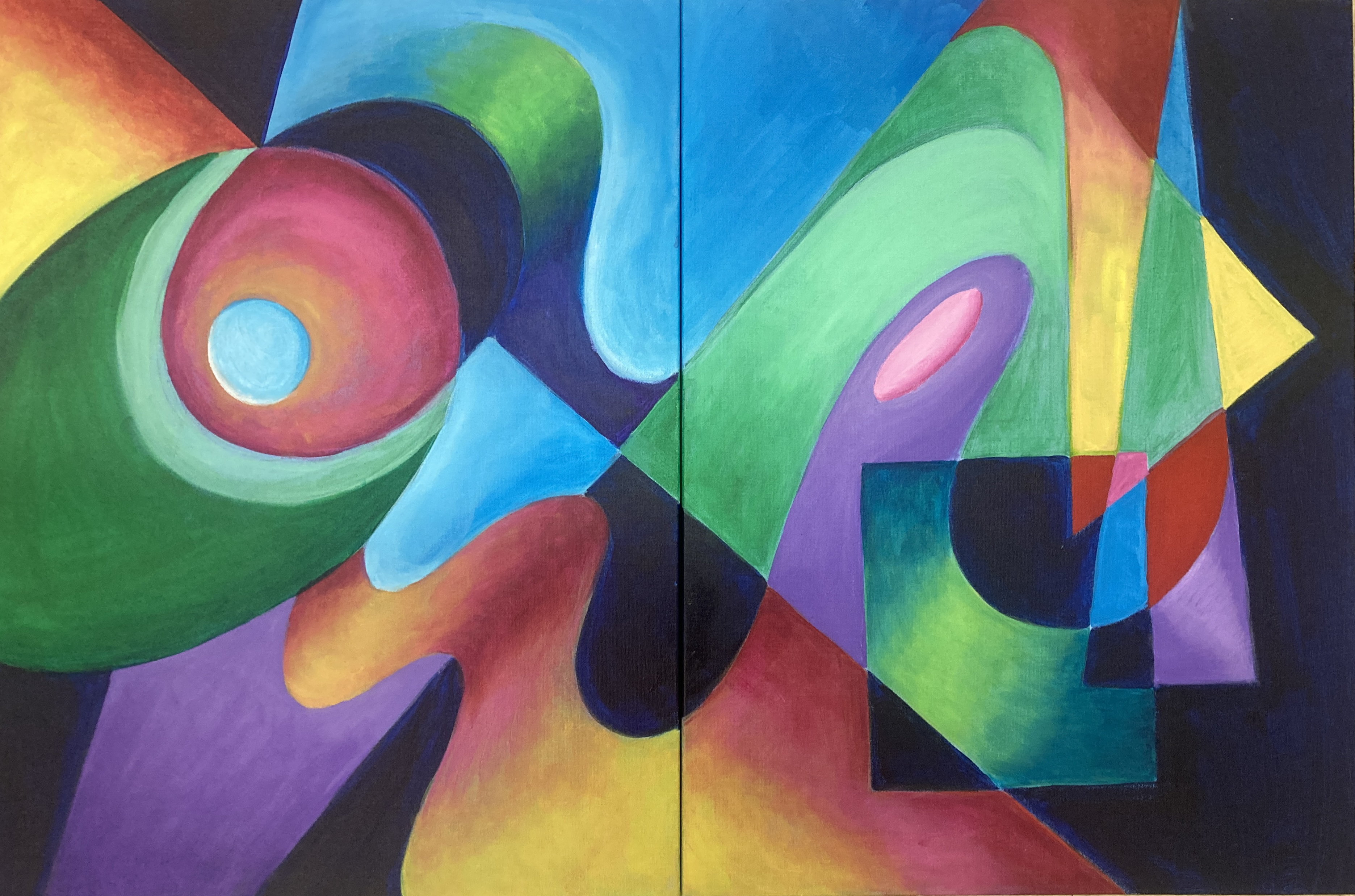
Number One at Tandem Press celebrates the vision of Tandem Press founder William Weege and the groundbreaking work of the press’s first collaborating artist, Sam Gilliam. Their partnership established a spirit of experimentation and technical innovation that continues to define Tandem Press today. Featuring works that reflect Gilliam’s bold approach to abstraction alongside Weege’s commitment to collaborative printmaking, the exhibition honors the creative foundation upon which the press was built. Together, these works trace the beginning of a legacy that has shaped generations of artists and printers.
Sam Gilliam (1933-2022) was born in Tupelo, Mississippi. Since the early sixties, Sam Gilliam has been a pillar of the Washington D.C., the modern, and the contemporary art communities. He has tested the boundaries of color, form, texture, and the canvas itself over the course of his long, productive career. Gilliam was a major contributor to the Washington Color School, a group of Washington D.C. artists that developed a form of abstract color field painting during the late 1950s through mid-1970s.
His inventive approach to creating art has also had a great impact on the field of Abstract Expressionism. One of the most important African-American artists of the twentieth century, Sam Gilliam was the subject of a 1983 retrospective exhibition at the Corcoran Gallery in Washington D.C., Modern Painter at the Corcoran: Sam Gilliam. His works are included in prestigious collections such as the Art Institute of Chicago, the Beymans Museum in Rotterdam, the Phillips Collection, the Corcoran Museum, the Hirshhorn Museum, the National Museum of American Art, the Metropolitan Museum, the Museum of Modern Art in New York, the Tate Gallery in London, the Walker Art Center in Minneapolis, the Chazen Museum of Art in Madison, and the Musee d’Art Moderne de la Ville de Paris among many others.
William Weege (b. 1935, Milwaukee, Wisconsin; d. 2020, Arena, Wisconsin) was a pillar in the printmaking and papermaking fields in the United States. He exuberantly explored unconventional printmaking processes, adding paint, collage, handmade paper, and sewn elements to various printed surfaces to create vibrant abstract expressions. He was also an early practitioner in the revival of handmade paper, which started in the 1960s.
Although he is best known for his later abstract works, much of his early art commented on social and political issues. Weege studied engineering and city planning and worked at a commercial printing firm before returning to school to study printmaking. He received his MFA from the University of Wisconsin-Madison. In 1970, Weege represented the United States at the Venice Biennale before joining the UW-Madison Art Department faculty in 1971. He founded Tandem Press in 1987. In addition to being a distinguished professor, Weege had a very successful career as an artist. He exhibited widely, and his work is included in many museum collections throughout the United States including the Philadelphia Museum of Art, Detroit Institute of Art, San Francisco Museum of Modern Art, Brooklyn Museum of Art, and the Museum of Modern Art in New York.


