A Place for Art the Arts Club of Chicago's Timeless Relevance
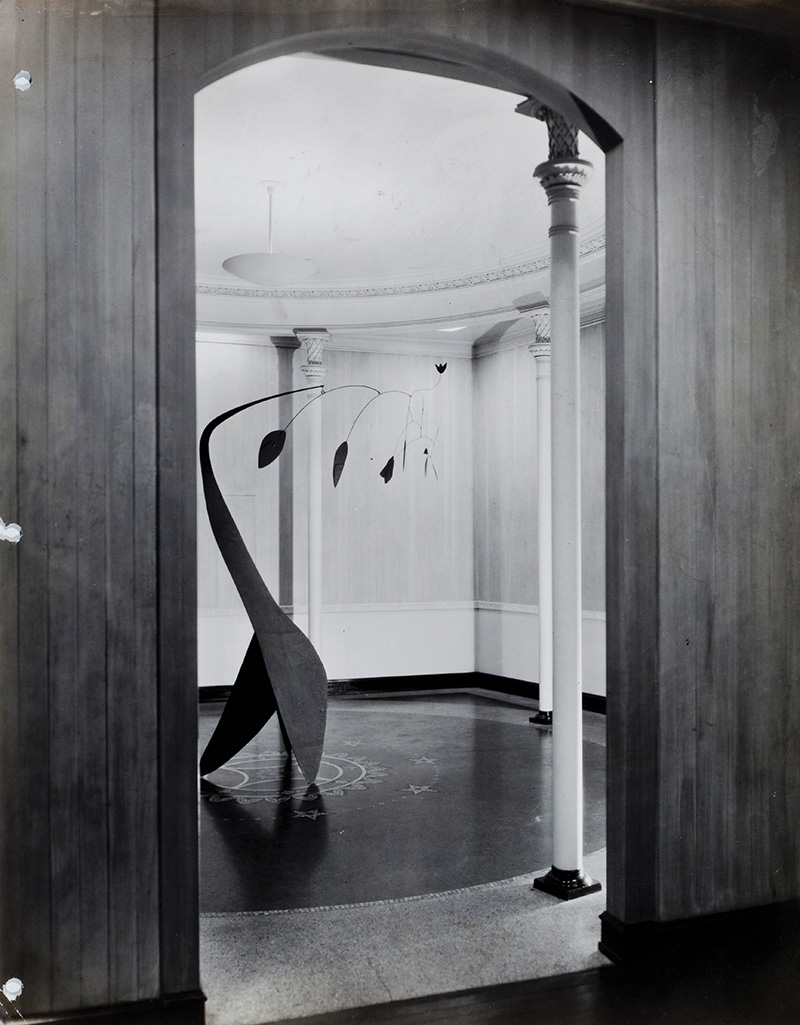
Undated photo: Alexander Calder, Red Petals, 1942. Commissioned for the Club’s 400 N. Michigan Ave. location.
This feature appears in CGN's spring/summer 2026 issue. To purchase a copy or subscribe click here.
By GINNY VAN ALYEA
The Arts Club of Chicago has a long history of championing the arts in the city, and it’s been the site of many key events in Chicago’s cultural evolution. A venue for public exhibitions and installations, The Arts Club, as its name indicates, is also a private club with an engaged membership. We spoke with Executive Director, Curator Janine Mileaf about what makes the club unique in today’s art landscape as well as what it can offer the public and current and prospective members who wish to engage with art.
CGN: For readers who may not know the club well, can you briefly share the story behind its founding and original purpose?
Janine Mileaf: The Arts Club was founded in 1916, just after the Armory Show (the first major exhibition of modern art in the United States) exposed Chicago’s antipathy toward such radical art forms. Students at the School of the Art Institute, for example, burned a faux Matisse painting in response. As a result, a group of artists and tastemakers came together to form an institution that would raise Chicago’s level of awareness about the international vanguard through exhibitions, programs, and conversations that would be open to the public. As was said at the time, we would bring together “art lovers” and “art workers.” Early documents about the process of our founding insist that The Arts Club would be a place where people could come to see something new and decide for themselves whether or not to embrace the art--disagreement and debate was built into the idea.
CGN: What does being a private club in today’s art ecosystem allow you to do differently from museums, galleries, or nonprofit art spaces?
JM: Members of The Arts Club of Chicago pay dues to belong. For this, they get access to our community, dining facilities, and many private programs and events. However, their dues also support our public mission to make exhibitions and events accessible to a broad audience. In this way, members here participate in a deep, intimate conversation while providing a civic good. This model gives us flexibility in our program and allows us to support work that might not be broadly popular at the moment--this was exactly the impetus for our founding.
CGN: How do public exhibitions fit into the club’s broader mission?
JM: Public exhibitions remain at the core of our being--we exist to bring art and performance to the city of Chicago. Indeed, we have expanded our exhibition initiatives through a street-facing program in our garden to address spectators who might not think of coming to a gallery or museum. This outdoor space is situated at the very busy corner of Ontario and St. Clair--where pedestrians stream by constantly. The Garden Projects, which feature installations by Chicago-based artists, provide a moment for our neighbors to encounter art during their regular routines.
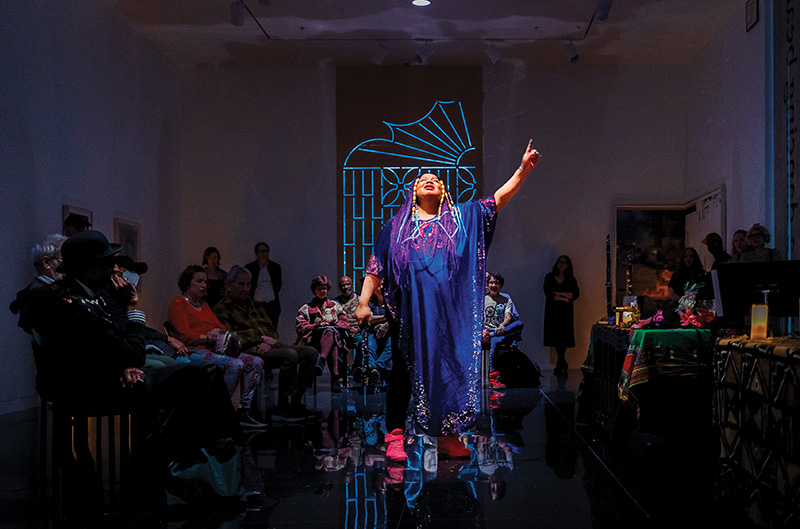
Angel Bat Dawid performs at the Arts Club in April 2025. Photo by Sarah Elizabeth Larson.
CGN: How does the club create opportunities for meaningful interaction between artists, collectors, and members?
JM: Each of our exhibitions and Garden Projects are accompanied by a series of public events. We host gallery tours, panels, and artist talks, but also experimental performance and artist interactions. For an exhibition of work by Suzanne Jackson in 2022, we organized a panel about Black Abstraction with local artists and thought leaders including the late sculptor Richard Hunt. Last year, Cosmo Whyte invited clarinetist and Chicago icon Angel Bat Dawid to interpret his exhibition through improvisational music, and Temitayo Ogunbiyi engaged two local ice cream makers to invent custom flavors related to the botanical drawings she had on view. The ice cream, made of sorghum, corn, chili, or paw paw was distributed at community events both at The Arts Club and around the city--like at the Arboreal Society’s Humboldt Park dance party. These inventive engagements open a dialogue around the visual art on display and also extend an invitation to new circles of potential friends.
Other times, a public conversation may be driven by a broader topic of concern or by artistic curiosity. By commissioning performance work, we support an artistic ecosystem and instigate new ideas. Black Being, a work by the duo Flutronix that we supported beginning in 2019 was just recorded by the Chicago Sinfonietta on Cedille Records. Upcoming on April 28th, the indigenous scholar Stephanie Morningstar will speak on the power of plants to connect people.
CGN: Chicago has several independent, nonprofit as well as museum-affiliated collector groups today—what makes this club distinctive?
JM: While we welcome the company of so many newer initiatives, we believe there is nothing comparable to The Arts Club of Chicago because of its world-class exhibitions, collection, and performances, its legacy, its facilities, and its 110-year commitment to the avant-garde. There is no other place in which you can sit in the the very seats that were in the building when Marcel Duchamp came to install an exhibition of sculpture by Constantin Brancusi, climb a staircase designed by Mies van der Rohe, or be on the descendent stage that welcomed one of the first concerts by John Cage or that hosted talks by Igor Stravinsky, Gertrude Stein, or Jean Dubuffet. And while we are not a museum, our rooms are filled with art works that echo that history and move it into the present. The Arts Club of Chicago makes a home for art of all kinds--this function is our commitment to the city and to our membership.
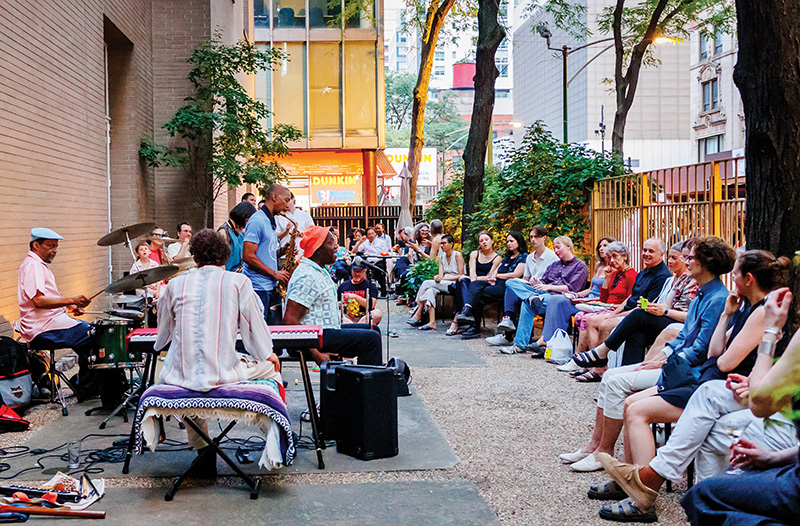
Current Arts Club Fellow Erez Dessel & Look Both Days perform in the Arts Club garden. Photo by Sarah Elizabeth Larson.
CGN: In an era when art spaces can sometimes feel either exclusive or driven by social scenes, how does The Arts Club think about fostering deeper engagement with artists and their work?
JM: We established a fellowship for emerging artists to make sure we are engaged with the next generation and that they have a place to connect in Chicago. Exclusivity is actually part of our constitution, but not only do we take our public mission very seriously, but we also want to redefine what it means to be exclusive. We build our membership from people who are curious. We are not trendy or superficial, but rather we cultivate an audience and membership that commit themselves to the arts in myriad ways. Our members are innovators, patrons of other arts institutions, they are professionals who support the work of makers, they are collectors, performers, and readers. Private clubs are actually on the rise lately because of a need for social belonging, and as part of that, we appeal to those who are searching for their people in the realm of art.
CGN: Can you share the process for someone to become a member of The Arts Club?
JM: We invite applications from all those who are passionate about the arts, that includes anyone who might be new to Chicago or the art world. The best first step if you don’t have an organic connection to a current member is to email our Membership Manager David Merz at membership@artsclubchicago.org. There is a sliding scale of dues that depends upon one’s age and/or role in the arts. That makes it surprisingly affordable for younger people or artists to join. Another way to find out more about The Arts Club is to attend one of our public events and talk to members and/or staff who are in attendance. Our public events are announced through our website, instagram, and mailing list, and everyone is welcome.
#