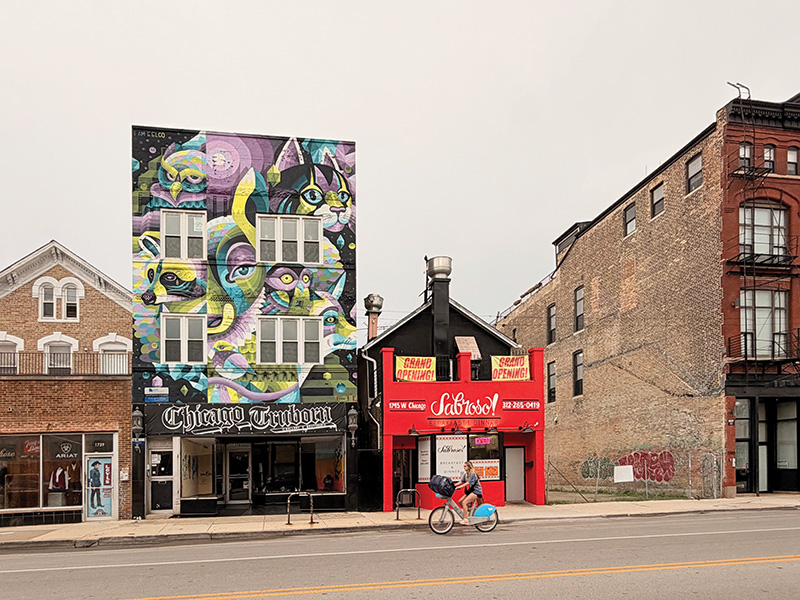
Behind the Scenes: What It Takes to Ready an Exhibition
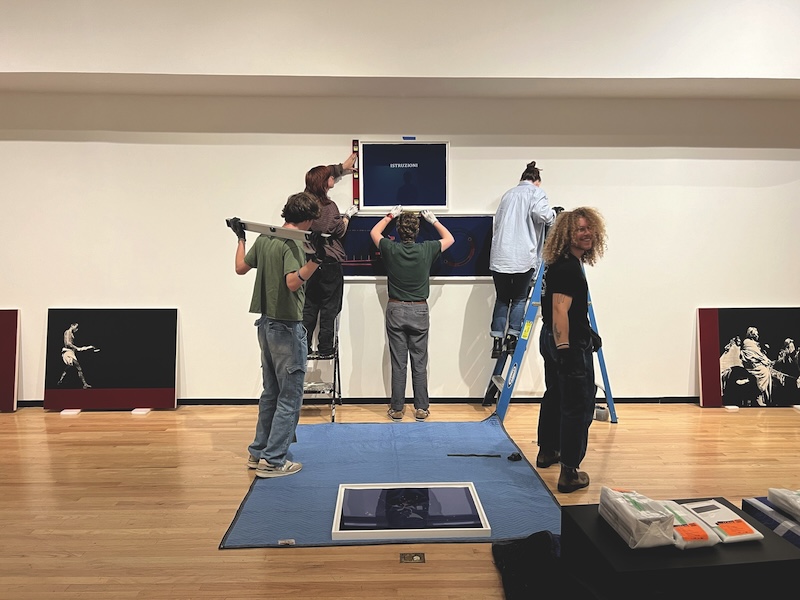
A team of trained Columbia College students work on an installation at MoCP
This feature appears in CGN's spring/summer 2026 issue. To purchase a copy or subscribe click here.
By Elisa Shoenberger
Every few weeks galleries open their doors to show off new art exhibitions that put artists center-stage to interested collectors and art enthusiasts. This is the familiar cycle of the contemporary art world. But before the plastic cups are set out and the wine is poured, there is a tremendous amount of planning and coordination that takes place behind the scenes, long before any artworks can be displayed. Many expert hands of gallerists and preparators use a range of tools and tricks to fit in late nights and execute quick-turnarounds to conceptualize, realize and promote the latest exhibition. Four Chicago gallerists and one museum chief curator recently shared with me just some of what it takes to put a stellar show together from start to finish.
The Spark of a Show
First and foremost, a gallerist needs to come up with an exhibition concept. For many galleries, it will be artist driven. Scott Speh, founder and director of Western Exhibitions, which recently celebrated its 20th anniversary, explains that his gallery represents about 20 artists, with each one exhibiting approximately every three years. He tracks this rotation via spreadsheet and reaches out to artists regularly to see when they will be ready for a future show, typically one year prior to opening. Speh says within that three-year rotation, he will opt to do a group show around a theme he curates every two years.
Grace Ebert and Christopher Jobson, co-founders and owners of the barely one-year-old gallery Joy Machine on Chicago’s northwest side, say they find artists they want to work with and then build a show around them. Some times they offer an artist a solo show, and other times the gallerists may build a group exhibition around that artist. When the art is ready, there’s a chance Ebert and Jobson are seeing works for the first time when they open the crates to install the show.
At the Museum of Contemporary Photography (MoCP) at Columbia College Chicago, Chief Curator Karen Irvine explains that MoCP has a similar approach to galleries: Irvine will see a photographer’s work and develop a show around that artist’s aesthetic or a related theme. Sometimes MoCP will hire a guest curator to do a show based on works in the museum’s collection, or based on their own expertise in a particular area, such as a photographer’s archive. Generally, the museum plans about 18 months out, but currently, shares Irvine, MoCP
is booked into summer of 2028.
Since Kimberly Oliva, owner and curator of Oliva Gallery, schedules her namesake gallery’s exhibitions 2–3 years in advance, often she bases her plans on what an artist has produced previously so she can see existing examples, instead of developing a show that for her is still conceptual. She shared, “It’s easier [for me] to be able to choose work based on what I have seen, as opposed to [just looking at] renderings or process shots.”
Contracts, Loans, and Prepping the Art
After a show is scheduled verbally or informally, it’s likely a gallery sends a contract to an exhibiting artist in order to establish the working terms of the relationship between the artist and the gallery. A gallery with a stable of represented artists likely has a standard operating agreement they use, though not all galleries do. Such a contract would cover terms including what percentage the gallery and artist will make from the sale, who pays which expenses, and whether the art will be held by the gallery for a period of time after the show ends.
For museums like MoCP, there may need to be additional requests to borrow works for forthcoming shows from other museums and galleries. Irvine explains that earlier is always better when it comes to asking for loans. Ideally, the request should be made a year to a year and half before a work is needed; some museums may charge a larger, or rush, fee if a request is made close to an exhibition opening date, since getting a work ready, prepared and delivered in short order can be expensive.
Then there are photographs. Some gallerists expect an artist to provide high resolution photos of their own work in advance; while other gallerists and curators may arrange to have photos taken once the works are installed in the gallery. Likely there is a need for advance or promotional photos as well as shots of the installed exhibition.
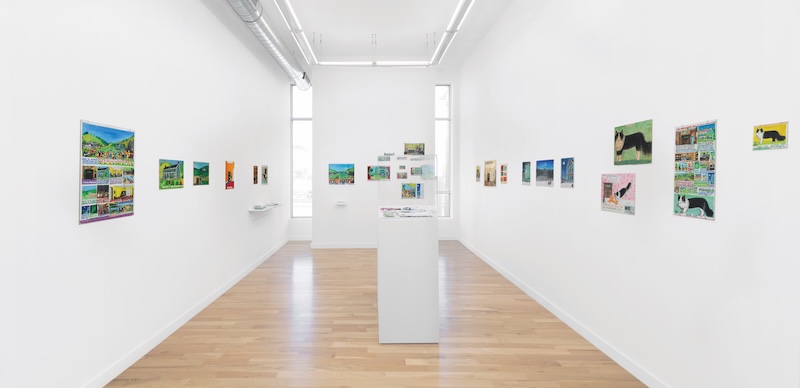
An installation view at Western Exhibitions
The Road to Installation
As the scheduled show nears, galleries have to receive artworks, ready them for display, install them, determine prices and finalize any additional on-site materials, such as wall text and exhibition statements. The gallery website, social media channels and mailing lists also need to be updated.
Receiving the artworks can present challenges. While local artists may sometimes be able to transport their own work, particularly if it’s smaller-scale, artists who live and work elsewhere have to ship art. Oliva says she has key reasons she uses her own shippers. “I have people that I can call. I’m not going to send it through FedEx,” she explains, “It’s going to go white-glove” from doorstep to doorstep. She notes that insurance often only covers the art when it’s physically in the gallery, not in transit.
To ensure that art works arrive in advance of the show, Speh says he sometimes has to give earlier deadlines. “I used to be an artist. I know how some artists think and work,” Speh explains, “Sometimes you have to use little tricks to actually get things on time.”
However, not all art is ready to be displayed when it arrives. Speh notes, “if it’s a work on paper, most of the time we need to frame the work.” That means allowing time for the framing, which takes at least a month. Irvine says that MoCP works with Columbia College students to mat and frame pieces for upcoming exhibitions.
Before installation can begin, galleries may opt to paint and patch the walls to prepare for the new show. Occasionally, an exhibition requires something more involved, such as painting the walls a different color or adding vinyl sketches. But for the most part galleries aim to stick to the predictability of white walls. Speh notes that he discourages artists from deviating from white walls because he is the gallery’s lone staff member and he usually has only a few days between shows. One exhibition will close Saturday afternoon and the next one must open the following Friday evening.
When it comes to figuring out where exactly to install the art for a new exhibition MoCP’s Irvine says she and her team often create a mock-up of the exhibition using the software SketchUp. However, inevitably there will be changes to make once photographs are installed. Figuring out which work goes where is often a collaborative process with the artist. There is also timing to consider because of what is needed to prepare the walls, since trained student workers will help paint and spackle the galleries and then put up the wall texts and more once the work placement is set.
Oliva takes a more intuitive approach. She never really knows where the pieces will go until the works are in the gallery. She outsources the labor to someone with expertise hanging work, but she makes the choices of where to hang or install the art. Since Oliva regularly participates in art fairs around the country, she’s used to having to put pieces in place quickly with a limited amount of time, whether pieces hang on a wall or sit on a pedestal.
Thinking about, arranging for, receiving and placing art is its own process. There is also the question of pricing artwork that is for sale. The gallerists I spoke with said it’s common to let an artist take the lead on discussing pricing, especially if the artist has an established market or is represented elsewhere, since pricing must be consistent in the market. Speh explains that for a younger artist, or one who has not previously exhibited in a commercial gallery, pricing discussions can be a collaboration between the gallerist, artist and sometimes curator in order to establish the appropriate sales goals and figures and address all costs related to the exhibition.
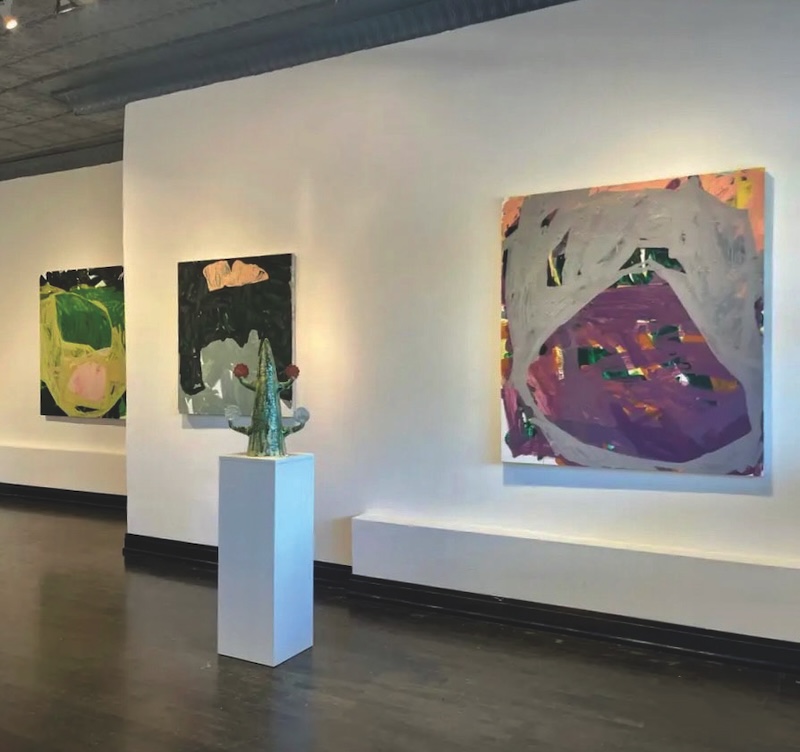
A mix of paintings and sculpture on view at Oliva Gallery.
The decision of whether or not to include a lot of accompanying text, on the gallery walls or elsewhere, varies by artist and by exhibition. Many commercial galleries do not have wall tags, since too much explanation could potentially detract from the art itself as well as clutter the wall space. Instead, a gallery will often make a binder or packet available at the main desk with thumbnail images and additional information. Most galleries opt to list prices on a price sheet, and works that have been sold will have a small red dot sticker next to the image on the sheet. Gallery visitors should always feel welcome to ask about prices, individual information and availability if it’s not readily available.
MoCP includes wall tags for pieces on display that include the artist’s name, nationality, birth year, work title, date, medium, and credit line, according to Irvine. But not all pieces have an explanatory text, since there can be many pieces in an exhibition. Usually the curator writes text that will help the viewer understand the exhibition on a deeper level.
In addition to setting pricing and producing text for wall tags, curators and gallerists must write an exhibition statement, often in collaboration with the exhibiting artist. For instance, Ebert and Jobson say they will talk with an artist several times to understand their work before putting together written materials for the exhibition.
Promotional materials should go out a few weeks or in some cases, a few months prior to the opening of the show. There is an ideal timeline, and then there is reality. Ebert and Jobson, like most gallerists, often have to wait until they can get photographs of the art work in order to put together any promotional materials. In addition to running Joy Machine, Jobson and Ebert lead the online art publication Colossal. They understand well, as they say, that “you need images if you’re going to write about art.” Once they receive images, they can start sending press releases out via email.
Oliva says she will have postcards made that she sends to clients. She also puts together a catalogue, which is a way to make an exhibition last long after it’s opened and closed. For the majority of galleries, sending out carefully crafted emails is the most cost effective way to spread the word about a new show to collectors, curators and the press.
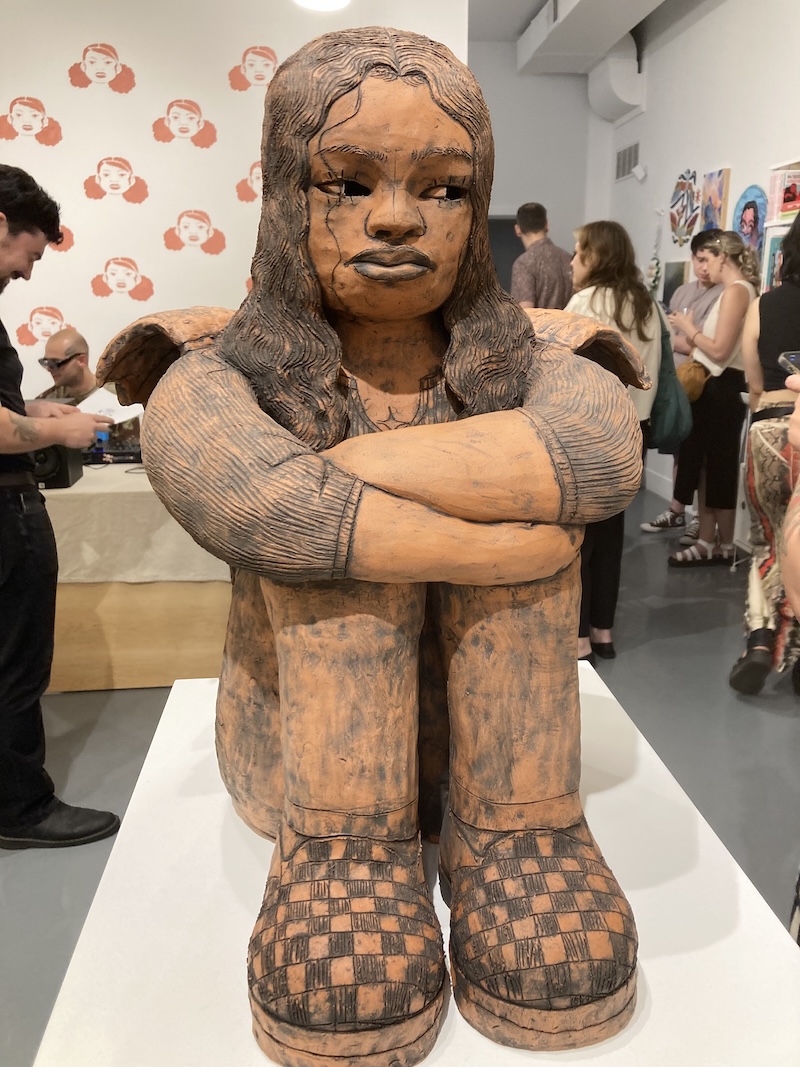
A sculpture by Sydnie Jimenez at Joy Machine
Closing the Show
At the end of the show’s run, gallerists must organize pick-ups and deliveries for local collectors as well as pack up any art to be shipped, either to buyers, back to the artist or to someone who loaned a work for the exhibition. Some galleries may decide–or be obligated–to keep any unsold pieces at the gallery for a period to see if the piece may still be sold. Any unsold works that are not on display likely have to be packaged for storage or displayed in a private area of the gallery.
Irvine notes that the first thing they do at MoCP at the close of an exhibition is review all the works to ensure that they are in good condition before being returned.
Once the works are taken down, a gallery may need to repaint and patch the walls to prepare for the next show. The ehibition process begins all over again.
The next time you visit a gallery to see a new exhibition, consider what happened before the work you are admiring got there. There is so much happening behind the scenes, before the doors even open to the public, that it is an art form in and of itself.