Bias Cut at Hans Goodrich: History and Style Threads through Artistic Generations
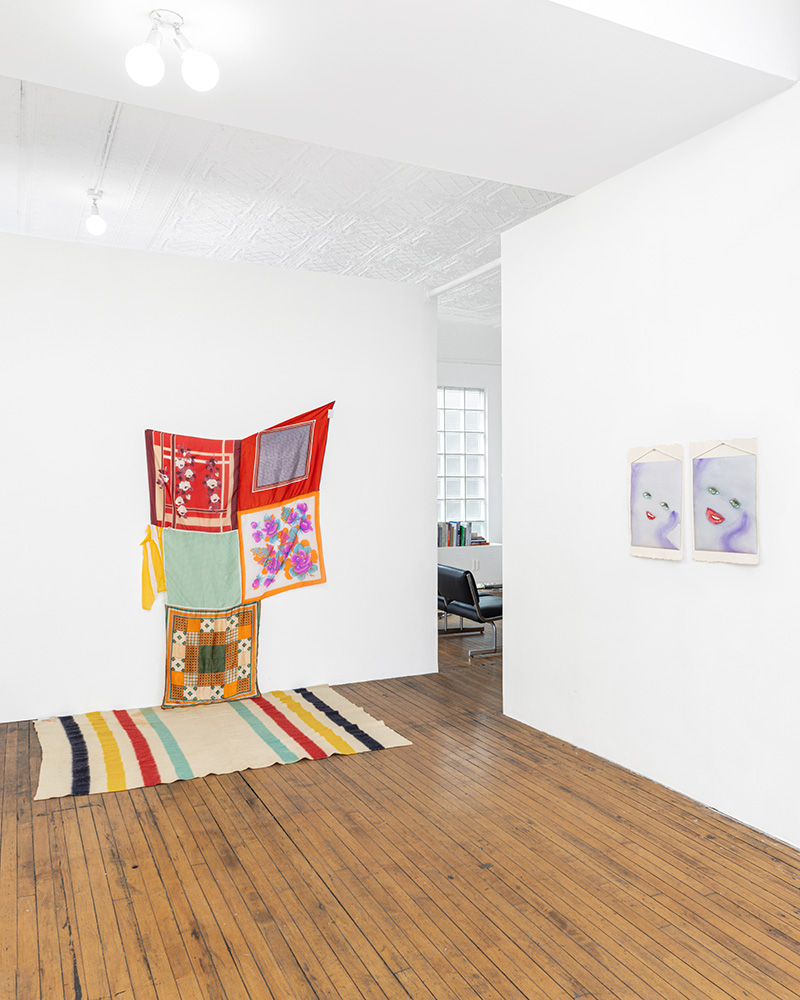
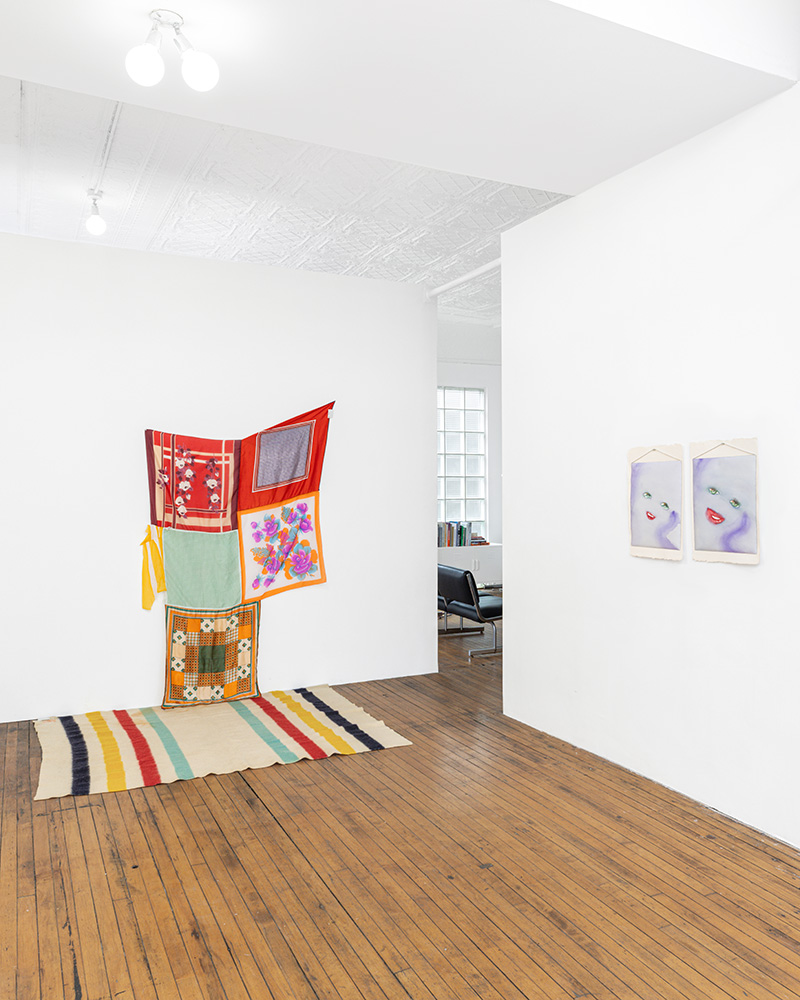
Eric N. Mack, And Re said: Ras Protective Collection, 2019. Silk scarves, fabric, thread, tape, pins, and wool blanket, 79 x 75 x 58 inches
By SUSAN GESCHEIDLE
I finally made it back to Hans Goodrich, where those Sunday hours are a total lifesaver. I knew the current exhibit, “Bias Cut,” was fashion-focused, but was surprised at how much it resonated. It’s one of the more engaging exhibitions I’ve seen lately; while there is a strong fashion thread running through each piece, the way these artists’ histories and styles talk to each other across generations is what really makes it work.
The gallery continues to hit its stride. “Bias Cut” is a perfect example of what Peter Anastos and Daisy Sanchez have been building in Pilsen since opening in fall of 2024. They’ve carved a niche by mixing emerging artists with mature and historical figures. It’s a smart balance. There’s plenty of room for newer voices, but it’s refreshing to see a gallery give this much space to mature artists and established legacies.
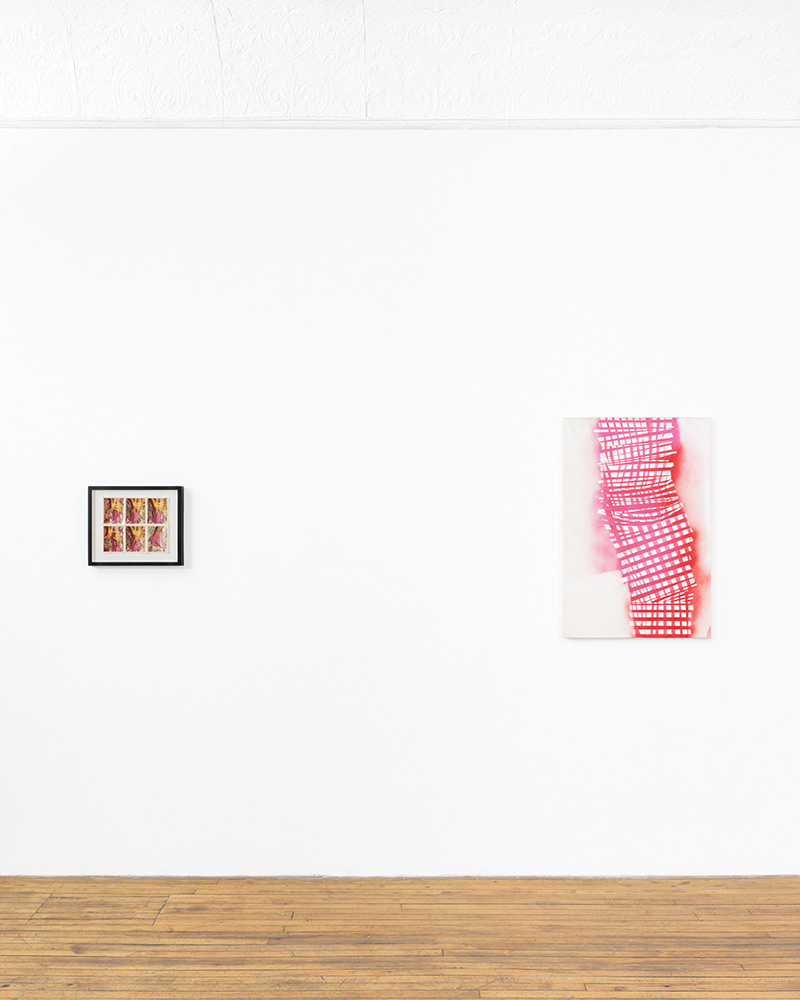
Installation view: Left: Antonio Lopez, New York City, Shoe Series with graffiti backdrop, Liliana Cavendish, 1976, Unique Kodak Instamtic prints, 13 x 14.75 inches.
Right: Cheryl Donegan, Untitled (Dress, Kuba), 2011, Spray paint on canvas, 36 x 24 inches.
Take Antonio Lopez, the creative force who defined the look of 70s icons like Grace Jones and Jerry Hall. His “New York City, Shoe Series”—specifically the grid of Kodak Instamatic prints of Liliana Cavendish—uses vibrant pink boots and yellow ribbons binding the model’s limbs, dragging subcultural eroticism straight into high fashion. Cheryl Donegan’s, “Untitled (Dress, Kuba,)” fits right in here; her spray paint depiction of a torso bound in red gingham mirrors Lopez’s ribbons but adds a sharper sense of physical constriction.
That feeling of being boxed in is a direct cousin to Christina Ramberg’s famous sketches of corsets and girdles. A longtime staple at the School of the Art Institute of Chicago, her piece, “Untitled,” captures that tension where garments make you feel powerful yet physically held back all at once.
The youngest artist in the show, Hannah Taurins, maintains the exhibit’s charged energy with her colored pencil drawing, “Runway Nurse.” Depicting Naomi Campbell in a clinical yet provocative Marc Jacobs-era outfit from the Louis Vuitton x Richard Prince Spring 2008 collaboration, the work bridges the age gap to veterans like Lopez, Ramberg, and Donegan through its shared use of pop culture, fashion, and sensuality.
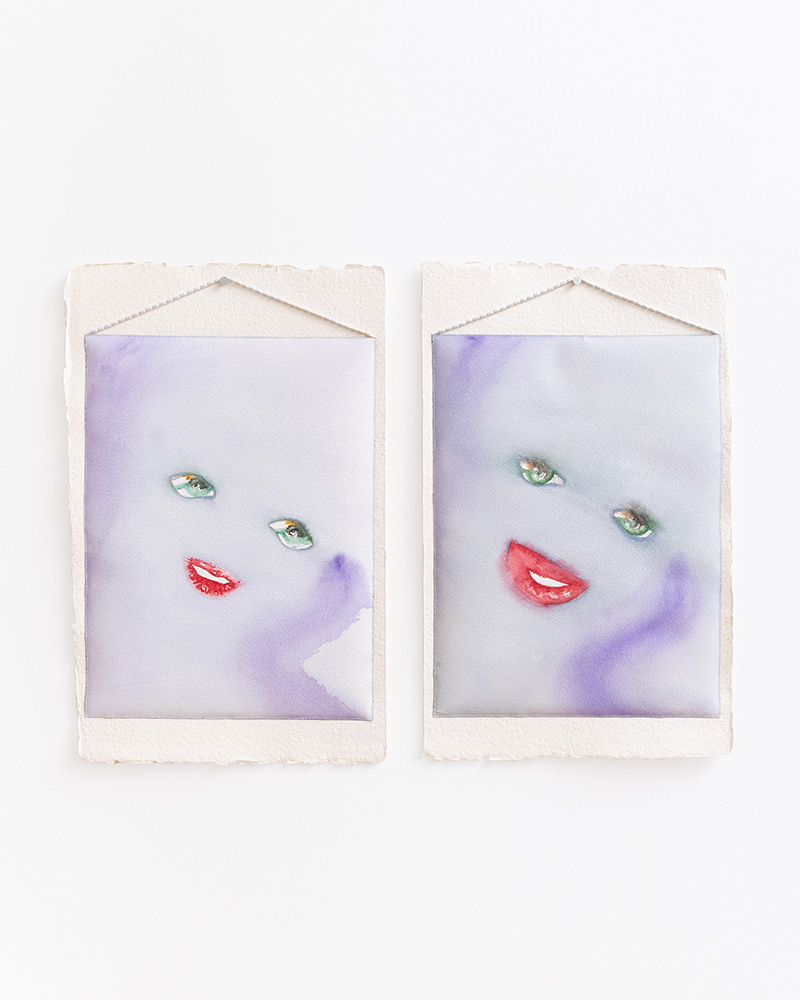
Andre Walker, Iggy and Bliss: Visible Timeline, 2016. Watercolor, thread, string, cotton. 21 x 13 inches (each), 21 x 26 inches (total)
That high-intensity lens shifts from the clinical to the tactile in Andre Walker’s “Iggy and Bliss: Visible Timeline” diptych. Against a soft violet background, the green eyes and juicy red lips jump out at you—the lips have the hyper-real, silicone look of girls with fresh lip filler. Walker’s work sits in that sweet spot between fashion and fine art; instead of sticking to a flat canvas, he builds the piece by sewing on the watercolors and stuffing them like a quilt. It’s a clever, hands-on technique that hits the “Bias Cut” theme perfectly, playing with the way fabric—and art—can be draped and manipulated.
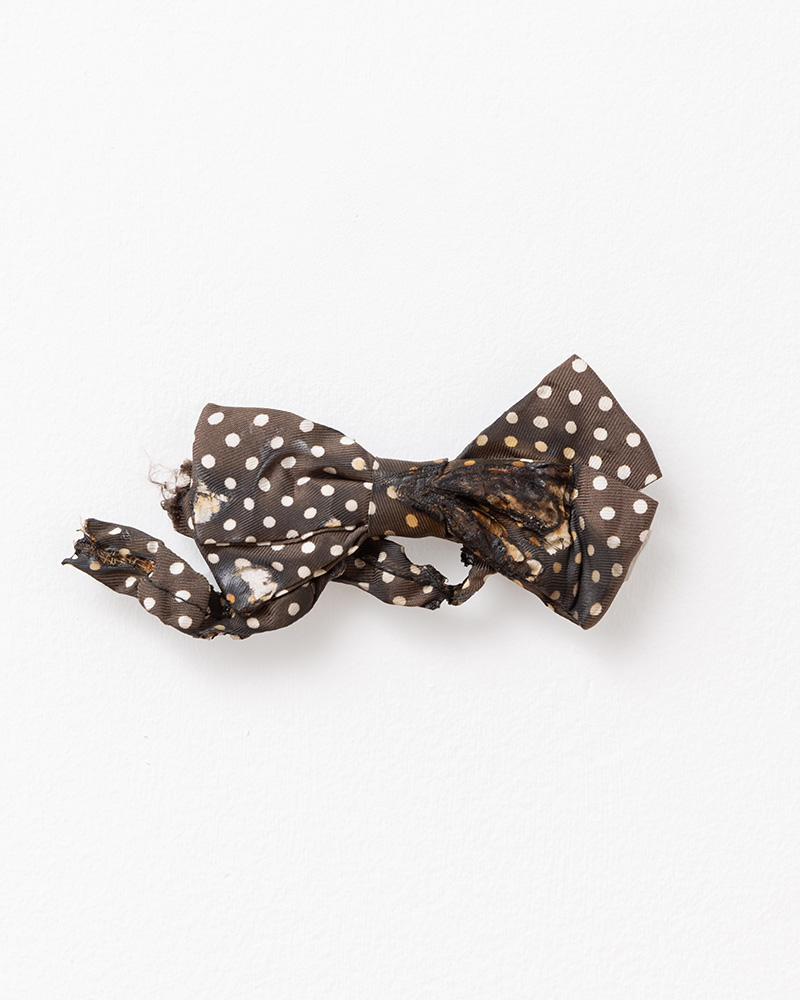
Lil Picard, Burned Bow Tie, 1968, Unique edition from S.M.S. No. 4, Fabric bow tie, 2.5 x 4 inches
Eric N. Mack picks up that tactile thread in “And Re said: Ras Protective Collection.” By mounting Pendleton blankets and silk scarves across the floor and wall, he nods to Walker’s DIY style and iconic Pendleton coat collection from 2018. He’s essentially painting with fabric; seeing his work next to Walker’s makes the influence feel like a direct conversation.
That conversation takes a sharp turn with Lil Picard’s 1968 piece, “Burned Bow Tie.” The oldest artist in the show, a Madison Avenue milliner and avant-garde rebel who lived to 94, Picard proved that revenge is best served scorched. After catching her husband in an affair, she torched his bowtie collection, an act that led to her producing 2,000 singed pieces for the S.M.S. (Shit Must Stop) portfolio and cementing her role in the Destruction in Art movement. At first glance, the tiny polka-dot bowtie is charming, but the charred edges carry the weight of betrayal. It’s a “sleeper” hit that rewards anyone who doesn’t pass it by.
“Bias Cut” works because it swaps formal gallery stiffness for the energy of a family reunion. The curation is so precise that you can feel the pieces talking to each other across generations—like the mother and daughter collaboration, “Restlessness and Life Does Not Exist,” by artist Susan Cianciolo and her daughter Lilac Sky. The exhibit is a rare look at an art world where the backstory is just as compelling as the aesthetic. Anastos and Sanchez have hit the mark here, showing that evolution of style belongs right alongside the history of fine art.
#
Bias Cut is on view through February 22, 2026
Hans Goodrich
1747 S. Halsted Street
Chicago, IL 60608