EXPO CHICAGO 2026: Focused, Busy, and In Step
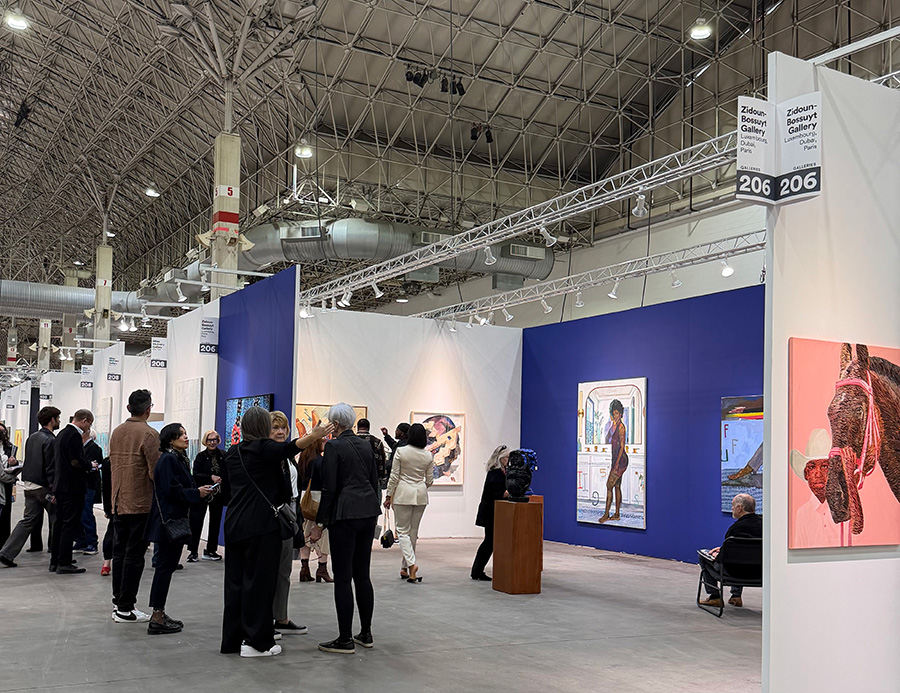
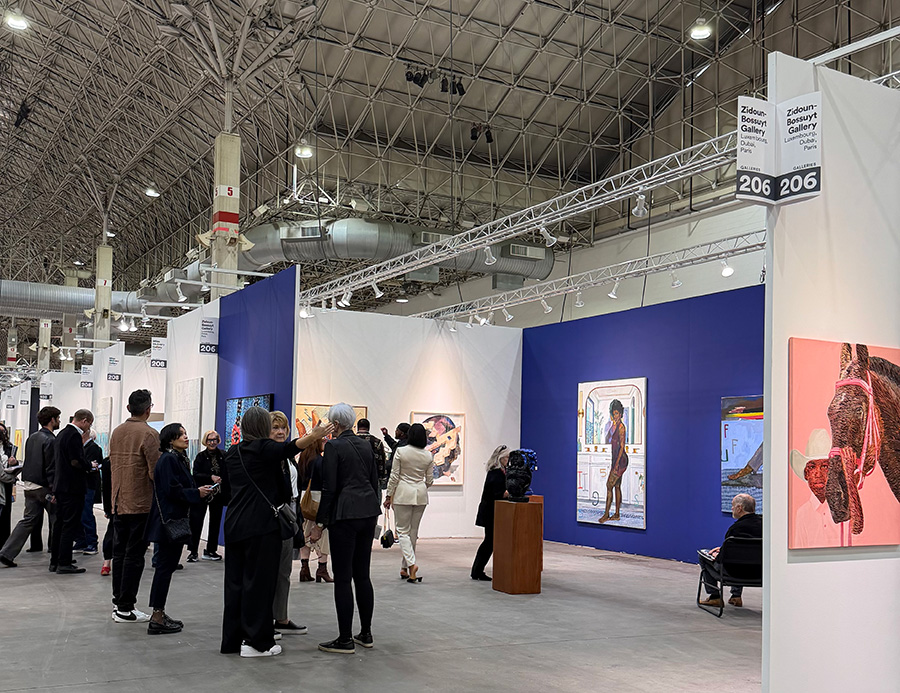
Visitors to EXPO CHICAGO Thursday afternoon during preview hours
By GINNY VAN ALYEA
EXPO CHICAGO 2026 wrapped with a steady energy that held throughout the week—consistently busy, but not overwhelming, and with a sense that people were there to look closely and engage. Early sales set a confident tone: GRAY reported placements including Theaster Gates’s 3 Women (2025) at $340,000, works by Candida Alvarez at $100,000 and $55,000, Torkwase Dyson at $55,000, McArthur Binion at $35,000, and a Rashid Johnson work at $25,000. Secrist | Beach, meanwhile, placed Luftwerk’s Open Frame (2025) with the Nelson-Atkins Museum of Art at $150,000, underscoring strong institutional activity from the outset.
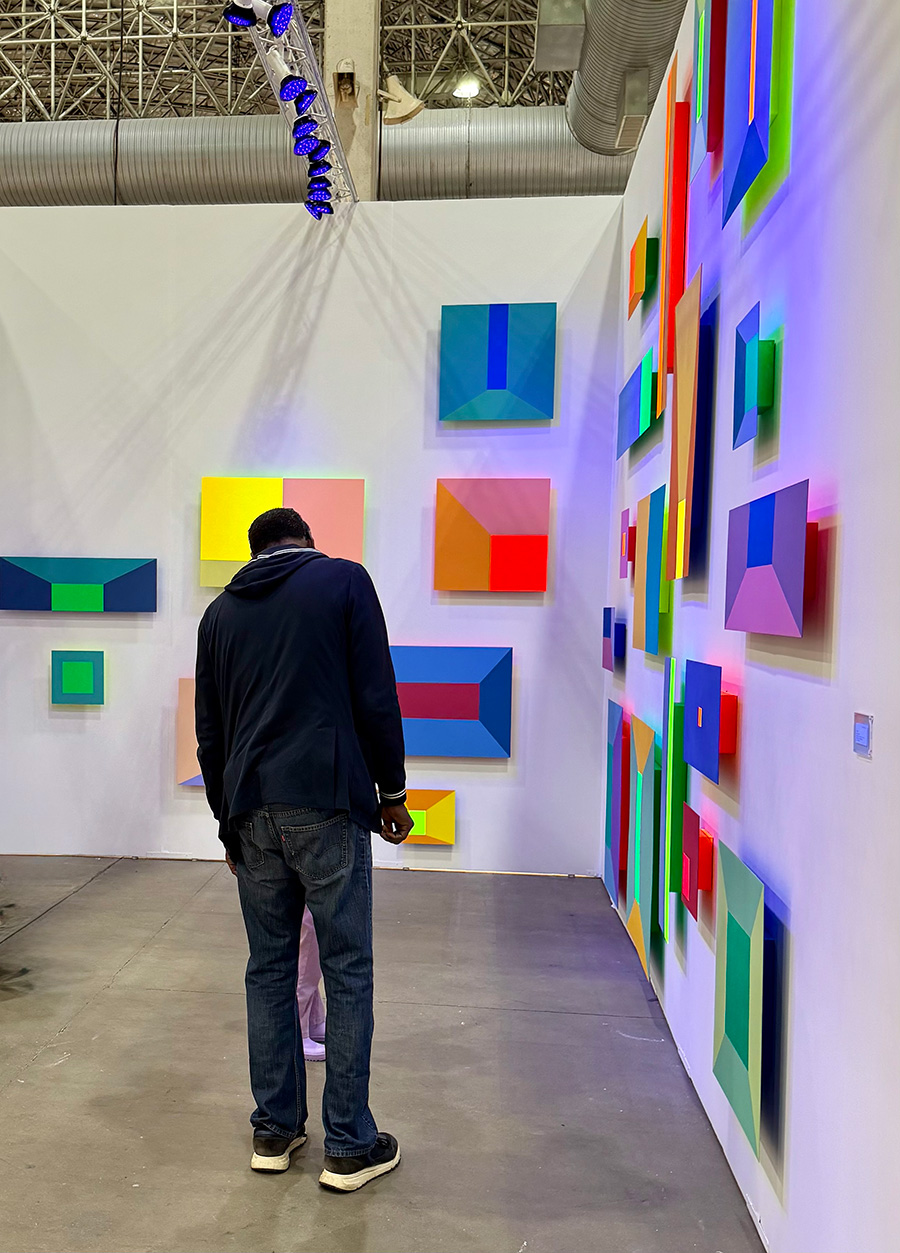
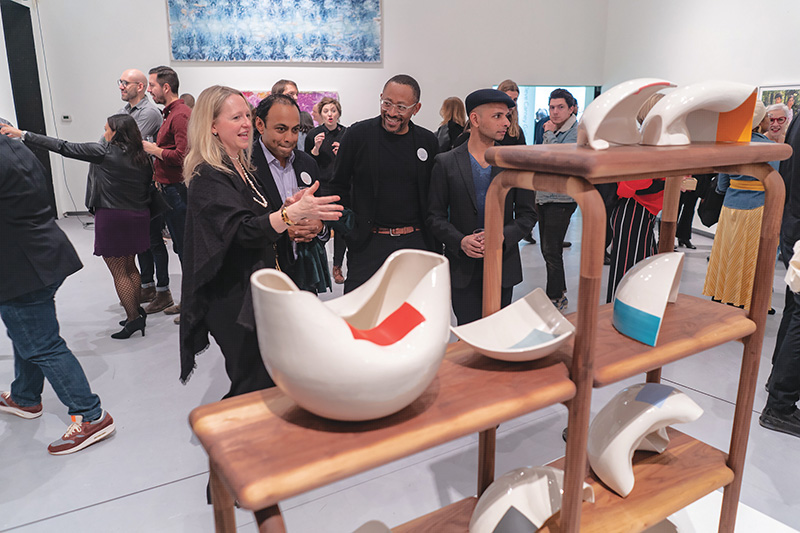
A viewer studies Luftwerk's work at SECRIST | BEACH
This year’s edition felt more streamlined, and that shift paid off. The fair was easier to navigate, and the overall rhythm encouraged longer conversations and repeat encounters. Familiar collectors were out in force, but there was also a noticeable presence of new faces—always a promising sign for the city’s ecosystem.
Across the floor, the quality of work felt strong and cohesive. What stood out most, though, was a subtle but persistent thread: many artists seemed to be looking toward nature. In some cases it was direct—landscapes, organic forms, environmental references—but just as often it came through in palette, with earthy tones and atmospheric color dominating booth after booth. It’s a direction that feels very much in sync with the current moment, as artists continue to process instability, climate concerns, and a broader cultural shift toward reflection and recalibration.
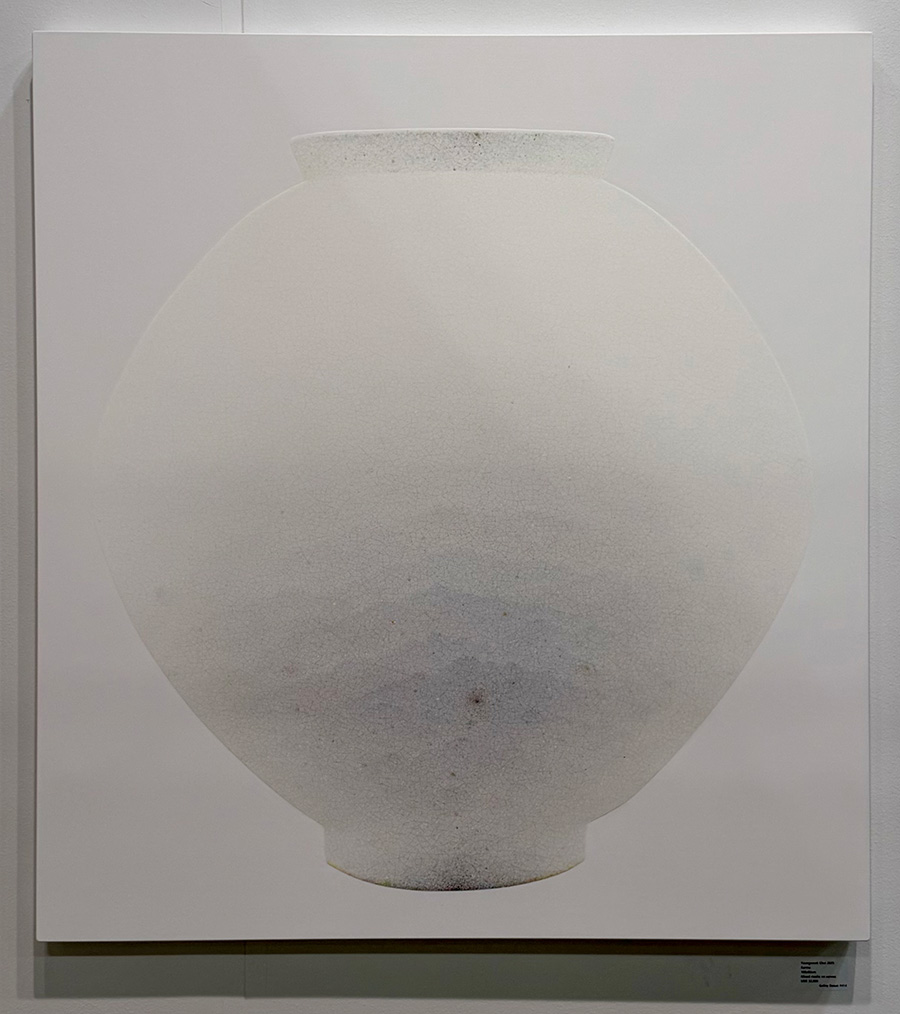
Youngwook Choi, Galley Dasun, Korea
There was also a stronger sense of curatorial intention this year, with more tightly conceived presentations and projects that added texture without overwhelming the fair. Institutional presence felt particularly active, and conversations around placements and future collaborations seemed to be happening at every turn. As Sibylle Friche, Partner at DOCUMENT, noted, “The 2026 edition of EXPO was a real success for us; we placed several artists from our program into good collections. We enjoyed meeting new clients and connecting with the many curators participating in the curatorial and directors' program.”
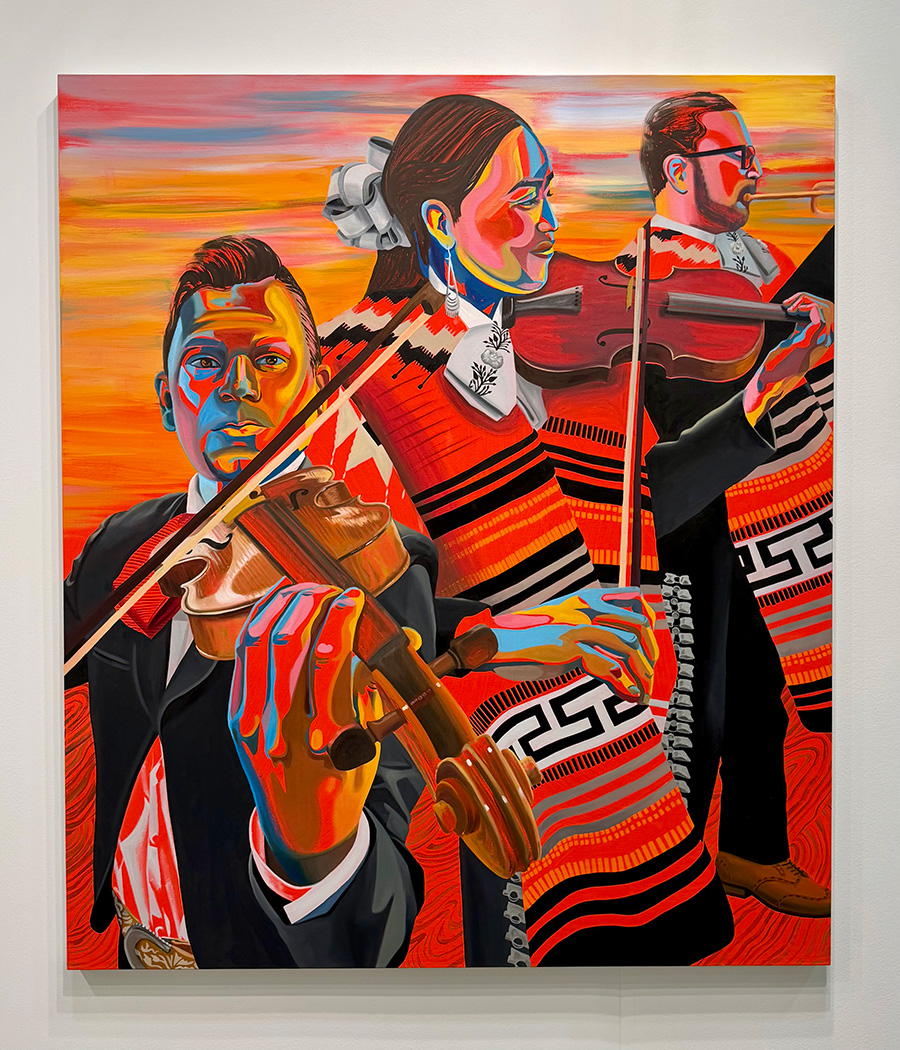
Aliza Nisenbaum at a joint booth by Regen Projects and Anton Kern. Nisenbaum will have a monumental mural at the Obama Presidential Center when it opens.
That sense of momentum extended to galleries across the fair, alongside positive feedback from collectors and museum groups. Valerie Carberry, President & CEO of GRAY, pointed to the impact of new leadership, noting that Director Kate Sierzputowski’s first year has brought “dynamic partnerships” that reflect the collaborative energy Chicago is known for. Sales remained steady across a wide range of price points, with a mix of major placements and quieter, consistent activity—another indicator of a healthy, engaged market. Outside of the commercial market, EXPO also gave an early preview of the Obama Presidential Center's June opening, inviting fair visitors to view a scale model of the campus and to look more closely at works that have been commissioned for the collection. Taken together, this year’s EXPO CHICAGO felt grounded but optimistic: a fair that’s refining its identity while staying closely attuned to both its audience and the larger cultural climate shaping the work on view.
Through its collaboration with the Obama Presidential Center, EXPO CHICAGO presented Embodiment, a curated section by Dr. Louise Bernard, Founding Director of the Obama Presidential Center Museum. The section presented a selection of galleries inspired by the architecture and commissioned artists of the Obama Presidential Center, offering visitors an early preview ahead of the Center's public opening on June 19, 2026.
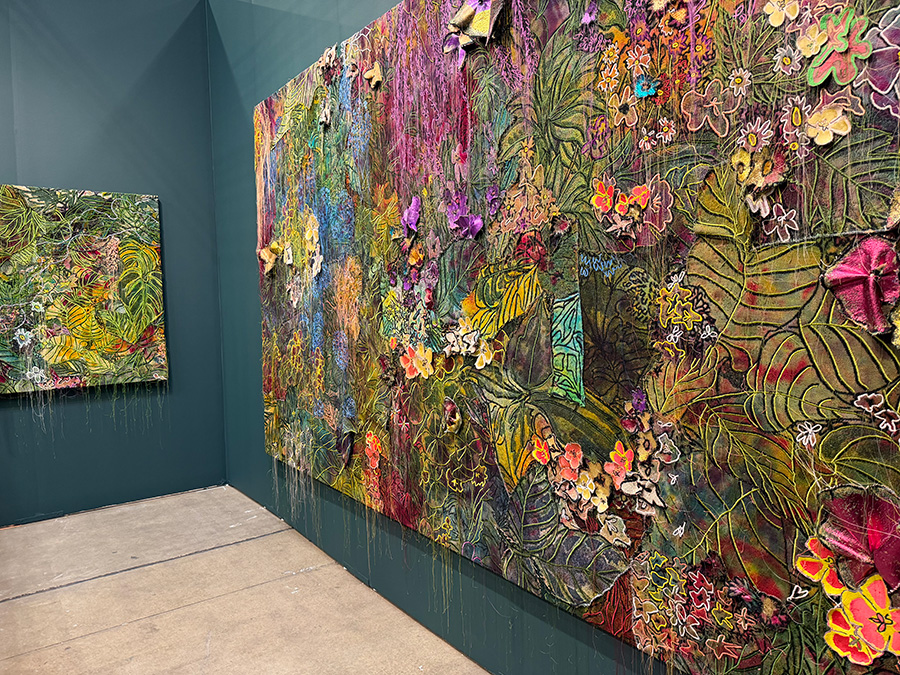
An installation of work by Melissa Leandro at Andrew Rafacz's booth
Strong programming of course continues to be an important and centralizing element of EXPO CHICAGO. Curated by Katie A. Pfohl of the Detroit Institute of Arts, Focus highlighted emerging galleries and artistic practices, creating an accessible entry point to the fair. Titled Gathering of Waters, the section explored landscape, migration, and adaptive practices of craft and care, connecting artists and galleries from the Mississippi River Basin with work from across the African, Latin American, and Caribbean diasporas. Curated by Essence Harden, Profile presented solo booths and focused group projects by established international galleries, offering depth, context, and sustained engagement.
The fair’s success has always mattered to Chicago and the broader Midwest art community, and even in a year without some of its usual components—like the nonprofit and print sections—its role remains essential. EXPO continues to serve as a central gathering point and calendar anchor, around which so much of the season takes shape, from the RenBen to the Intuit Art Museum gala, alongside the return of Barely Fair and the debut of Neighbors in the Gold Coast. It’s worth recognizing how important that consistency is—and to be grateful for the continued evolution of the fair under new leadership and ideas.
#
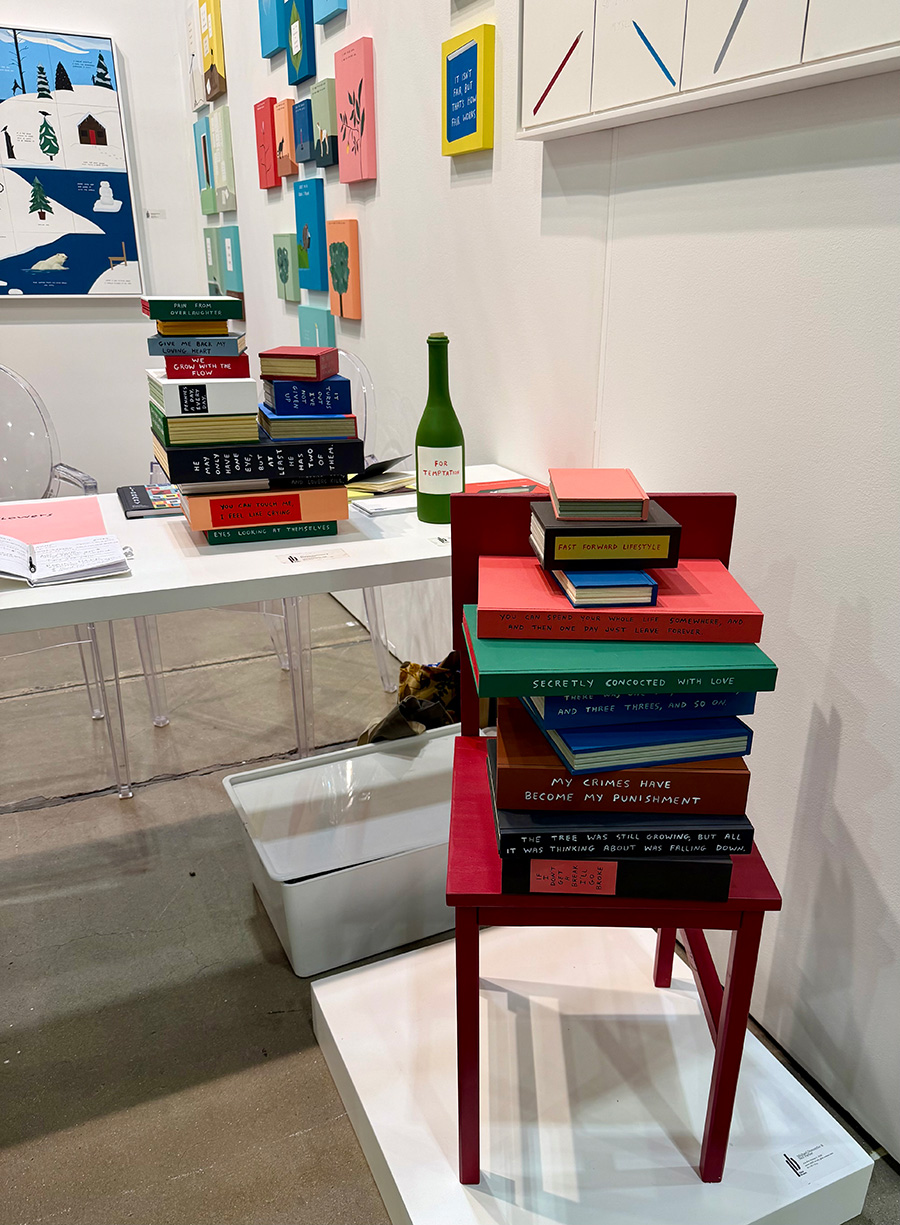
Michael DuMontier and Neil Farber at Patel Brown from Montreal