Prints, Prints, Prints: Accessibility, Sales, Exposure and Fairs
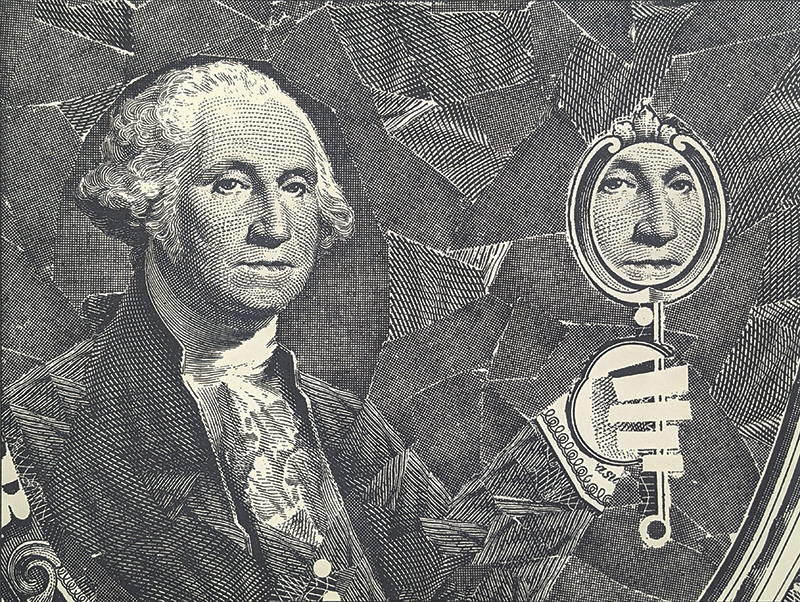
Mark Wagner, Self-Styled, 2 color Letterpress print, Edition of 25, 17.5 x 22”, 2024. Published by Bert Green Fine Art.
Note: this article appears in CGN's spring/summer 2026 magazine. To purchase a print copy or subscription click here.
By JACQUELINE LEWIS
Prints have always held an interesting place in the art world. They can introduce new collectors to artists and galleries while also offering seasoned collectors the opportunity to pursue works by artists whose paintings or sculptures might otherwise be out of reach. In 2026, prints continue to occupy this wide range of roles within the art market. At the same time, shifts in the art fair landscape, particularly between events like EXPO Chicago and IFPDA Print Fair, are influencing where print dealers, galleries, and publishers choose to show their work. Looking at these decisions offers a window into the current state of prints, the collectors who buy them, and the spaces where they are most often encountered today.
Prints – Thriving in the 2026 Art Market
In 2026, prints occupy a solid and increasingly visible position within the global art market. Jessica Cochran from Process/Process has noticed, “The art market has cooled. Of course some of this is geopolitics and economic pressures, but some see this as a correction. Prices just got too high, and so now we are seeing a rebalancing happening higher up in the market. I don’t know that this has affected prints too much. I mean, most of the print market is well below $20,000 (or even $10,000!) where I think the collectors are still showing up and market data does indicate that.” Statistics back up her experience. The segment of the market under $50,000, where most prints and editions are priced, has grown steadily, with prints and multiples now accounting for roughly 7% of overall art market share and rising.
There is a varying accessibility to prints that can attract a wide audience. New art collectors often begin their journey through prints since their nature often lowers the price since there are multiple copies available for purchase. As Jonathan Higgins of Manneken Press states, “I have had families come to print fairs to purchase a first piece for their child’s collection, newlywed couples choosing a piece for their home. It is precisely because of the lower prices of prints that collectors can focus on pieces that really speak to them, rather than letting investment value enter into the equation.”
Deborah Maris Lader and Lauren Steinert, Co-Directors of Chicago Printmakers Collaborative, say they see a varied group of people walking through their doors in search of prints. To them contemporary artists have been selling, while once more established print artists from the 80’s are seeing a decline in market value.
That being said, prints can sell for high prices and attract seasoned collectors. The fact that there may be multiple copies does not mean all prints are accessible for all buyers. Artists such as Rembrant Van Rijn, Albrecht Dürer, and many others are known printmakers with works that can be valued in millions of dollars, depending on quality. Collectors of these artists often look for early print impressions (pieces printed before the press was used many times, as evidenced through the quality of the line work) and highly preserved paper.
Some print collectors work tirelessly to complete a collection. For example, there are collectors set on acquiring all prints in Dürer’s Life of the Virgin series of 19 woodcuts from 1500–1510 or his Apocalypse series of 15 woodcuts from 1498. Others are forever on the hunt for another Rembrandt to add to a collection. Prints are often the only works available to collectors because paintings and drawings by artists at this level have values high enough they are limited to museums or rare collections. Collectors in this market relied on R. Stanley Johnson at R.S. Johnson Fine Art, an Old Master and Modern Prints dealer in Chicago for decades.
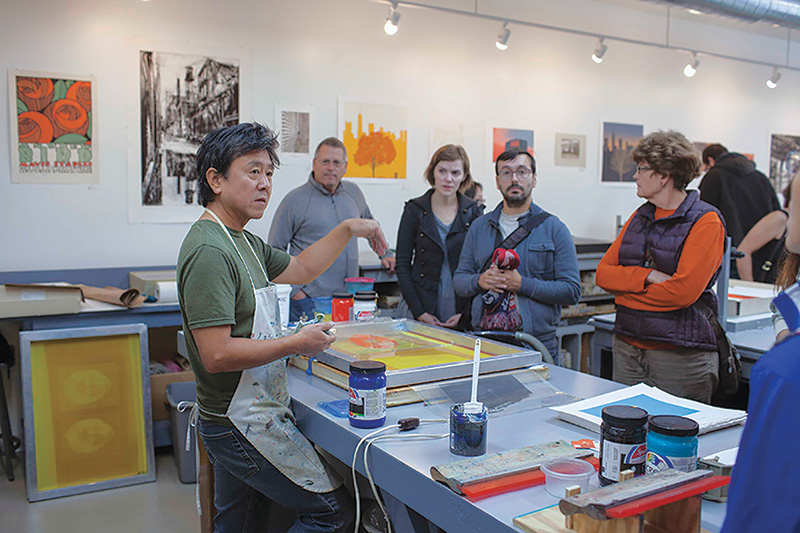
Hiroshi Ariyama demonstration of screen printing at Chicago Printmakers Collaborative during Open House Chicago
Fairs & Influence on the Market in General
Print collecting attracts a wide variety of art enthusiasts, from those just starting out to premier collectors, and in each case it’s prints that allow engagement with artists and artworks that may otherwise be out of reach in another medium like painting or sculpture. One major way that new collectors are exposed to the opportunities of prints, and collecting in general, is through fairs like IFPDA Print Fair in New York City and at EXPO Chicago.
Over the years, foot traffic to art galleries has declined as online spaces for collecting have grown. This can be a great method for more experienced collectors to add to their oeuvre but it makes it more difficult for new collectors to learn about their possibilities and for galleries, dealers, and publishers to expand their clientele. Art fairs can play a huge role in finding and developing new collector relationships.
Bert Green of Bert Green Fine Art speaks on how integral, for better or worse, fairs have become to galleries. “Unfortunately, fairs have become one of the only ways to reach new collectors, as the primary way that many collectors engage with galleries is at fairs (if they are not already connected to the gallery). I have been in business for almost 27 years and have seen walk-in traffic largely disappear due to the internet and the pandemic. I’ve reduced my open hours to a minimum and the vast majority of people who come in reach out first and make an appointment. Random visitors and spontaneous discussion are much rarer than they once were.”
Green states that it can be rough to rely so heavily on fairs because, “At their core they are fundamentally real estate operations and not curatorial projects. Galleries are somewhat constrained by them in that they need to get exposure via fairs, but the high cost is very risky. I’ve seen young galleries splurge on fairs thinking they would sell well only to find that they face insolvency. On the other hand, many established galleries thrive in the fair system. It’s complicated.”
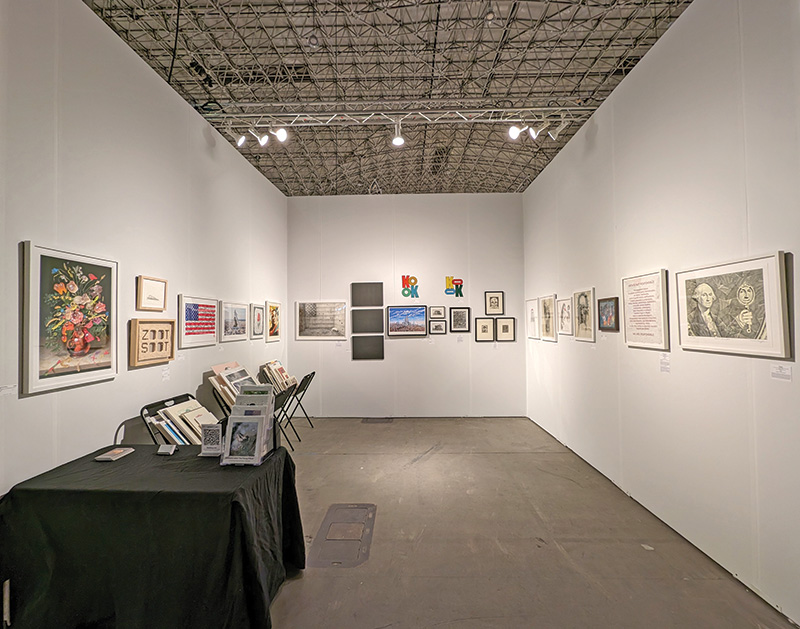
Bert Green Fine Art’s booth at EXPO CHICAGO in 2025
Cochran from Process/Process feels that fairs are incredibly important to publishers. “They allow us to introduce our program to new collectors which is crucial. Each fair offers a slightly different opportunity to contextualize our work. At EXPO, for example, we could show our limited edition prints by artists like Candida Alvarez or Michelle Grabner (and others) who had paintings or art on view in other booths at the fair. This allowed us to tell the story of print and what we do: not only is our print an expression of that artist’s practice in the form of an original, signed artwork, but also it is probably more affordable (accessible) to more collectors.”
With all of this in mind, it can be incredibly important for exhibitors to choose the correct fair to reach their target audience. There are a multitude of factors that print sellers consider when determining whether or not to show at an art fair. Most dealers I spoke with agreed about the top factors: cost and audience.
Jonathan Higgins owns Manneken Press in Bloomington, Illinois and is a veteran at fairs. Most of the 31 he says he has attended since 2008 are independent (meaning they are not owned by a parent corporation like Frieze) because those tend to be very highly priced. “It has taken me years of trial and error to determine which art fairs are right for me,” he says. “One of the main considerations, of course, is cost.” Due to the nature of most print prices, dealers need to sell many impressions to be sure that they at least break even.
Audience is also important. In a broader fair with many types of media, print booths can offer dealers an unique opportunity to inform and teach art enthusiasts about printmaking and its value, while print–specific fairs can be a great way to find active print collectors who may not be familiar with a specific gallery or publisher. Either way, before purchasing an expensive booth, dealers want to be sure that their art would be of interest for the audience of the fair and that it will meet the dealer’s goals for the show. Collector engagement is key.
Other aspects Higgins considers are a fair’s reputation, regional market, location, and exhibitor list. He also cares how fair management takes care of exhibitors. If a fair is only taking booth money, he says, and not supporting exhibitors, with marketing, services or programming, it becomes less worth the cost and time, though he acknowledges that is hard to determine before arriving.
Finally, there are travel logistics, costs and fair timing to balance. This year the IFPDA Print Fair in New York City is running simultaneously ith EXPO Chicago. Other than large galleries with massive inventory and a larger staff, most dealers had to choose one over the other, with the IFPDA fair considered very important to print galleries.
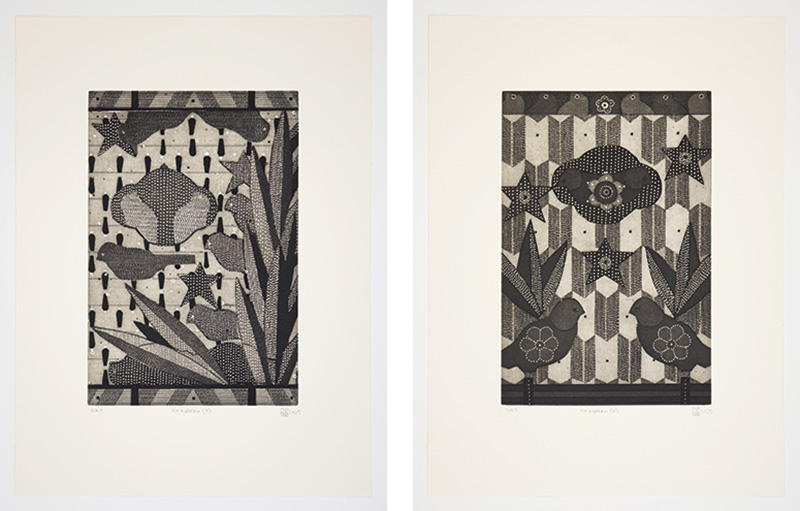
Left: Glenn Goldberg: Empyrean (1), 2026. Etching and aquatint, edition of 20. Image size:“18 x 12”, sheet size: 27” x 20”. Published by Manneken Press.
Right: Glenn Goldberg: Empyrean (2), 2026. Etching and aquatint, edition of 20. Image size: “18 x 12”, sheet size: 27” x 20”. Published by Manneken Press.
IFPDA and EXPO CHICAGO – Direct Competition and the End of EDITIONS
For the first time since 2014, EXPO Chicago will no longer offer its Editions + Books showcase. The section, which included 11 exhibitors in 2025, offered galleries that show a diverse array of print media and object-based practices a space to show their work at a lower rental cost. This was a benefit utilized by exhibitors such as Bert Green Fine Art, F.L. Braswell Fine Art, Process/Process, Chicago Printmakers Collaborative, Manneken Press, and the MCA, all from Illinois, as well as spaces as far away as Berlin and Dublin. Tandem Press, from Madison, Wisconsin was not part of Editions + Books last year, but they are a long-standing exhibitor at EXPO and they are opting to participate at IFPDA instead this year.
The elimination of Editions + Books has shaken up plans for exhibitors who are used to showing at EXPO. Green is concerned what this means for the Chicago print community. “I had always participated in the Editions section and found it to be reliably consistent, with excellent engagement and sales. I am unable to participate [in EXPO] now because I would have to pay the higher booth cost. I’m also concerned that there is no decent alternative for the print community in Chicago. It would be very useful if there were a new, standalone print fair. I am hoping to work with some print publisher colleagues to make that happen.”
Lader and Steinert of Chicago Printmakers Collaborative are also not exhibiting at EXPO due to the end of Editions but are considering other ways to continue showing a broader audience their prints. “We liked EXPO because it put printmaking on the international stage, and we easily held our own amongst the broader art world spectrum. We also did well financially,” says Lader. “We are disappointed to lose that opportunity this year, but we will continue to look for a way to bring more attention to the beauty of etching, lithography, screenprinting, monoprint, relief, and experimental and photo print processes to the world.”
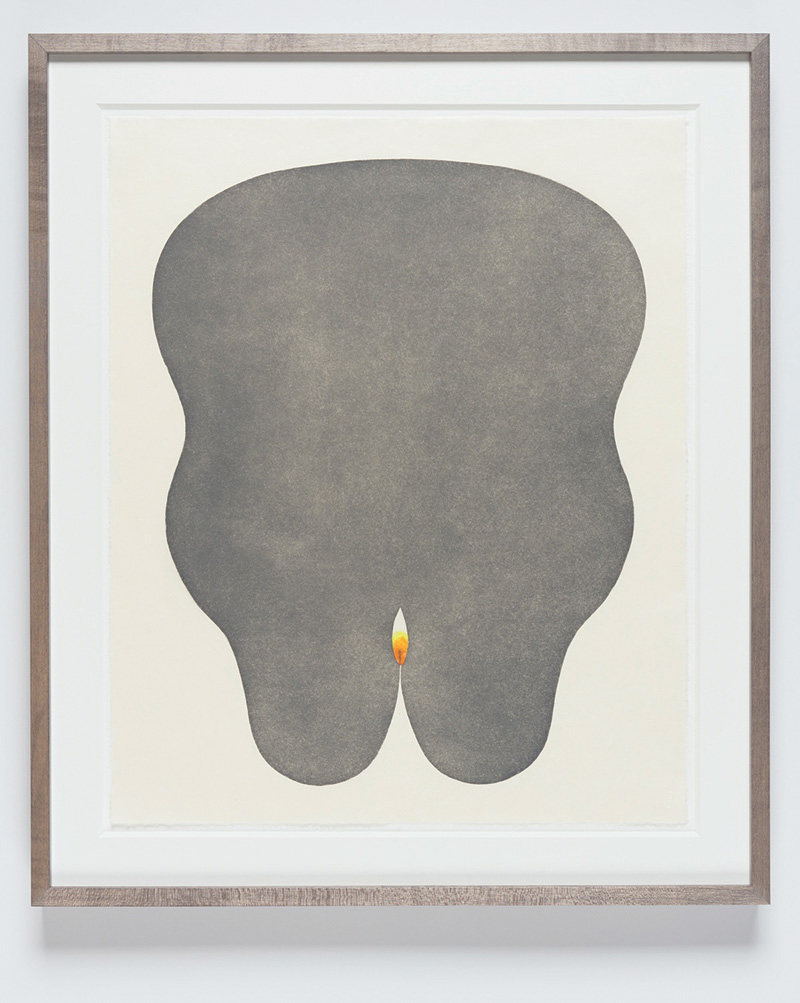
Alice Tippit, Flute, 2024. $ 1,800.00 (framed from $2,250). Courtesy of Process/Process
Some dealers are opting to exhibit at IFPDA Print Fair instead. Higgins needs the fair to kick-start his revenue for the year. “Sales have been pretty sluggish these first two months of 2026. I will be exhibiting at IFPDA in April and hope that I, and my fellow exhibitors, do okay.” He also mentions that the IFPDA Print Fair is a great fair to be a part of and that the organization has a stellar reputation and promotional team.
For Higgins, “EXPO Chicago was the pillar around which I built my publishing and fair schedule. The IFPDA fair has now taken that place. As the landscape of art fairs changes and the economy shifts, I may look more toward fairs run by dealer organizations, IFPDA, NADA, etc., which prioritize their exhibitors, rather than corporate entities whose motives can be pretty obscured.”
Despite shifts in the broader art market and the changing structure of art fairs, prints remain one of the most accessible ways for collectors to engage with art and are often a gateway for those new to collecting as well as a means of deepening an area of interest for seasoned collectors. Prints are sure to balance the space between accessibility and expertise, beautifully connecting a wide range of collectors with artists’ work.
#