Duncan Robert Anderson: Messengers and Oracles
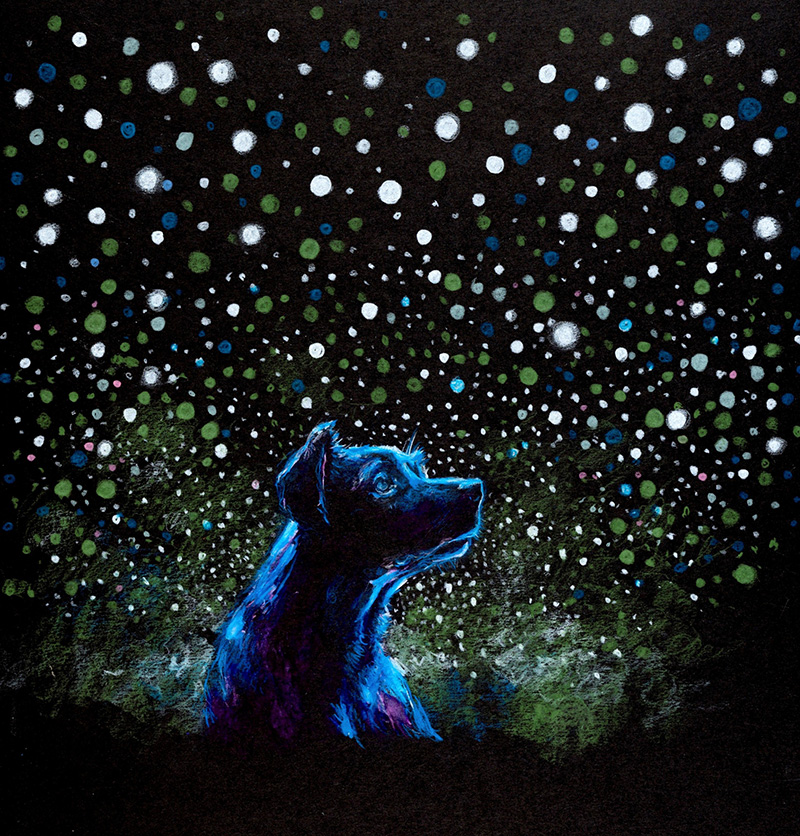
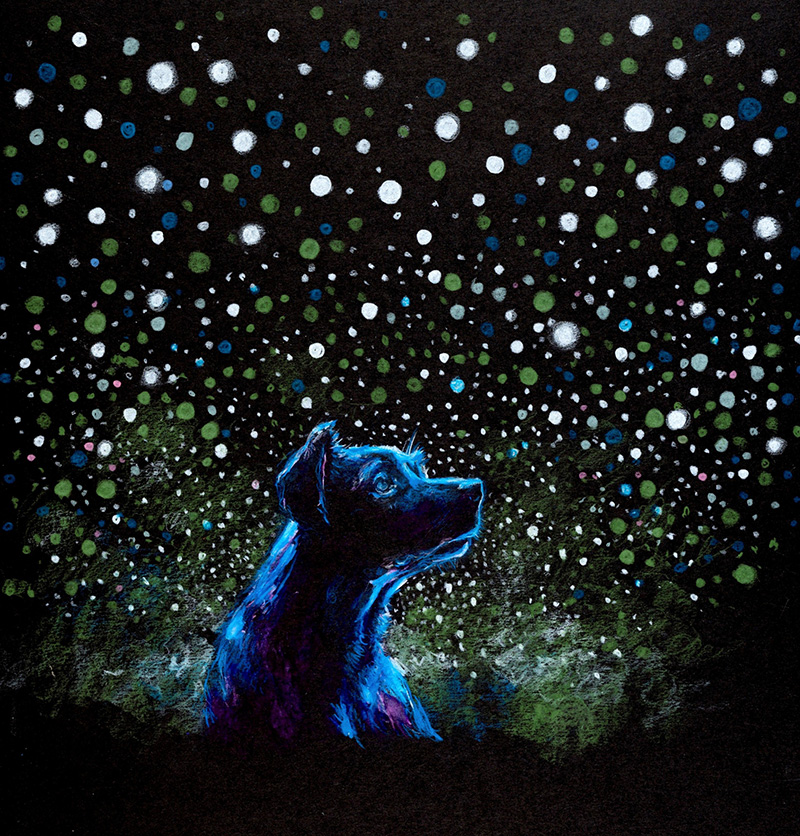
Stargazer (I remember you)
18" x 16" x 1 3/4"
colored pencil on archival paper, framed with museum glass
photo credit: Nathan Keay
By SUSAN GESCHEIDLE
Duncan Robert Anderson has long been a steady presence in the Chicago art scene, carrying an identity that is impossible to miss. He stands well over six feet and is consistently dressed in black from head to toe, complete with boots and a signature wide-brimmed cowboy hat. His silhouette has remained unchanged since he arrived from East Tennessee in 1998, save for his long hair slowly turning grey. Since we first met back in 2002, I have never once seen him out of this attire. Yet whether encountering him at gallery openings or during visits to the Museum of Contemporary Art Chicago, where he works as building operations manager, that imposing visual style is always balanced by an easy, genuine warmth and impeccable manners rooted in his Appalachian upbringing. It’s an unpretentious demeanor that has earned him a quiet, lasting respect across the community.
Anderson is best known as a dedicated artist and a vital behind-the-scenes force at the MCA. His current solo exhibition, Messengers and Oracles, at the West Town Chamber of Commerce, offers a welcome look into his personal and creative practice. Featuring nineteen drawings, the exhibition focuses heavily on memory and how we are shaped by places and people. The majority of the works were already sold, despite being exhibited outside of a traditional commercial gallery space. Opening night also celebrated the release of his beautiful monograph of the same name, which is now officially available for purchase at the MCA Store. The artwork leans into Anderson’s Appalachian roots, bringing his childhood background into a direct conversation with his decades of lived experience in Chicago.
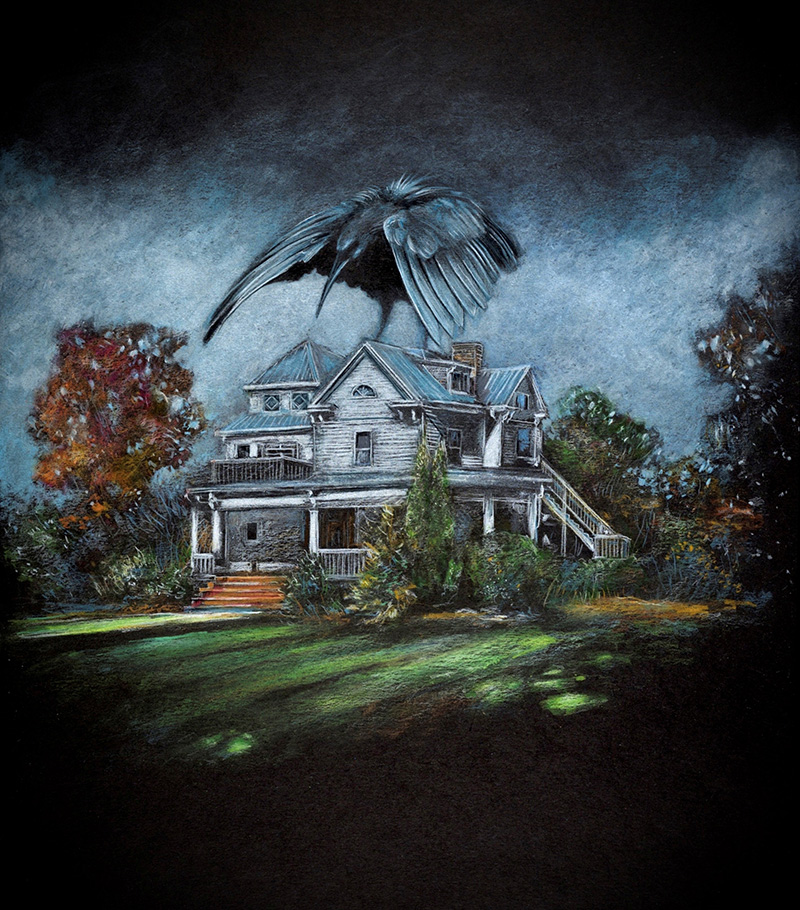
Stormlight
24" x 20" x 1 3/4"
colored pencil on archival paper, framed with museum glass
photo credit: Nathan Keay
Anderson’s geography isn't just a straight line from the South to the Midwest, though. His marriage has introduced a deep Japanese influence to his life, adding another layer to the work. You can see this cultural mix directly in some of the drawings, portraits of anonymous Japanese figures set against a backdrop of familiar Chicago architecture and cityscapes.
While Anderson’s drawings have always stemmed from his own life and memories, this newest body of work has a profound focus on loss and grief. The exhibition serves as a tribute to his mother, as Anderson recently reached the exact age she was at her passing. This enduring grief is compounded by the consecutive losses of his dog Smokey, his artistic brother-in-arms Tony Fitzpatrick, and his art hero Don Meckley between 2025 and 2026. In light of these profound losses, his signature technique of mark-making on black paper feels especially fitting, giving these deeply personal images a darker, more forlorn feel.
Anderson's process makes perfect sense when you understand a love for German Expressionism that dates back to his childhood. In the spirit of that movement, his technique of coloring on black paper makes the bright colors jump, letting his animals emerge directly out of the deep shadows. You can see this dramatic mood across his landscapes and cityscapes—whether capturing weathered old houses, the dark silhouette of the John Hancock Center, or the towering form of the Willis Tower.
Anderson notes he is a "huge fan of Symbolism and Romanticism," blending those traditions with "a bit of dream-like revelation and vision" to create a magical world of his own. He imagines solitary animals as protectors keeping watch over the people and places he has lost. Although only a few pieces on display feature human figures, many drawings are filled with bears, elk, wolves, birds, and dogs. By dropping these creatures directly into man-made settings, he creates a strange visual tension—granting the animals a powerful presence that disrupts an otherwise quiet human environment.
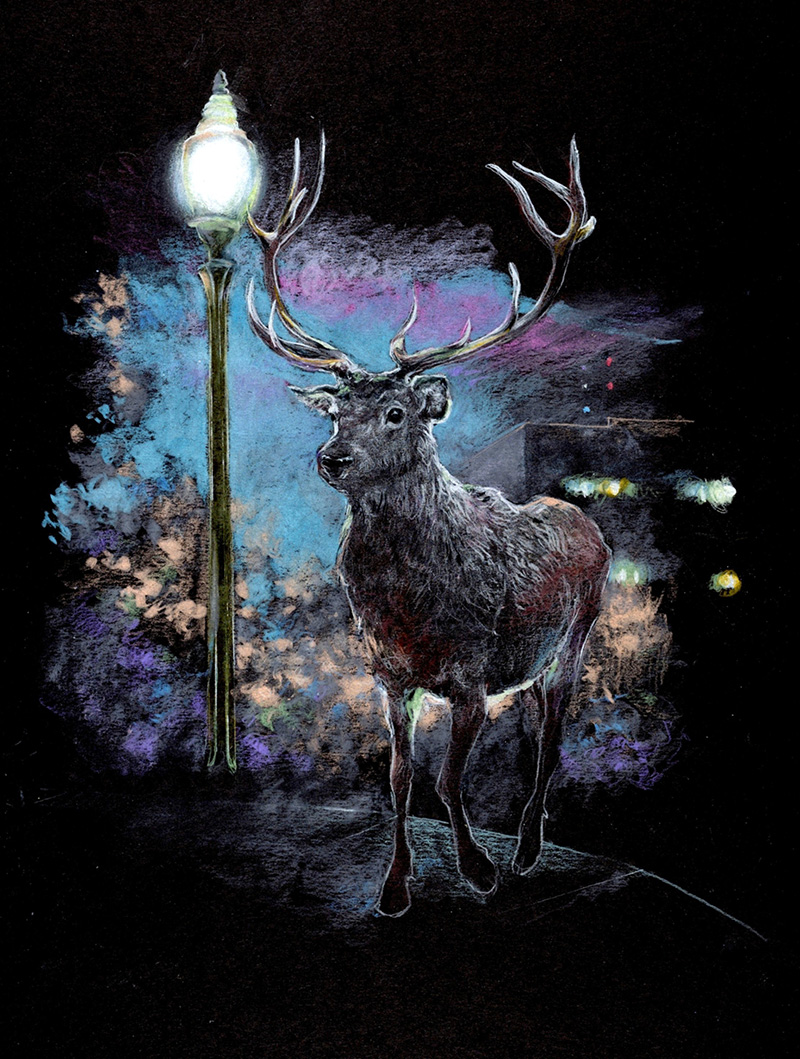
The Hospital Escape
24" x 20" x 1 3/4"
colored pencil on archival paper, framed with museum glass
photo credit: Nathan Keay
Many of these drawings focus on a single, isolated figure. The Hospital Escape (18” x 15”) features a massive elk standing under a glowing streetlamp. This powerful image hints at a wild animal breaking free from an institutional space and stepping out into the city, tapping into timeless themes of survival and freedom.
Storm Light (18” x 15”) shifts into a quieter, more tense atmosphere, focusing on the weathered Victorian house where Anderson lived in the attic while a student at East Tennessee State University. Warm sunlight hits the front steps and grass, bathing the home in a serene beauty that contrasts with the dark, stormy sky. Perched on the peak of the roof is a massive black heron with its wings spread wide—completely dominating the structure as both a menacing hunter and a fierce, protective shield: an oracle keeping watch.
The mood shifts with The Pact (18” x 15”), created in memory of Fitzpatrick. A well-worn tombstone stands in an overgrown cemetery with a wolf sleeping peacefully in front of it. Rather than feeling ominous or macabre, the image carries a serene beauty, and the sleeping animal brings a gentle ease to Fitzpatrick's passing. Through this peaceful presence at the grave, Anderson cuts through the heavy grief of the exhibition with a rare moment of comfort.
The Silent City (18” x 15”) blends his two worlds through an intentional ambiguity. Featuring a female face rendered in deep purple and adorned with traditional hair ornaments, an anonymous Japanese figure looks directly at the viewer with a calm expression against the dark silhouette of the Willis Tower. Anderson notes she “may or may not be a ghost or emissary,” juxtaposing her against the landmark to seamlessly connect his current life with his family’s heritage.
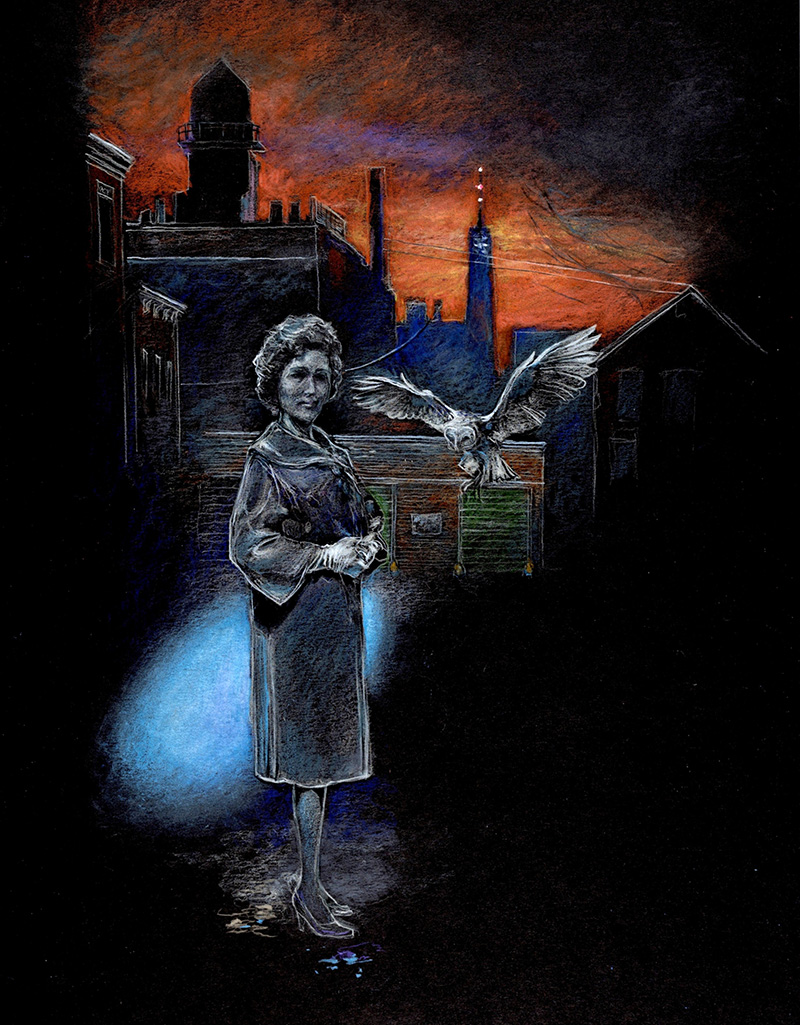
Sunday Morning
20" x 18" x 1 3/4"
colored pencil on paper, framed with museum glass
photo credit: Nathan Keay
A direct tribute to his mother is Sunday Morning (18” x 15”). Dressed in her Sunday best—a coat, scarf, gloves, and pumps—she stands against a soft blue glow as a white owl swoops toward her. The lights of the John Hancock Center glow as the iconic building rises in the background against a crimson and orange sky. This stunning juxtaposition brings her memory directly into the urban landscape he has inhabited for decades.
An atmospheric touch to the show is a collaborative sound loop by Paul Deuth. Anderson designed the audio to match the mood of what is on the walls, with Deuth shaping the sounds to be "dark, magical, and other-worldly." It is a beautiful blend of sight and sound that completely pulls the room together. Ultimately, the exhibition stands as a quiet reminder of profound artwork built on real human issues, ignoring the fleeting, superficial trends that too often dictate the whims of the contemporary art world.
#
Messengers and Oracles runs through October 23, 2026.
West Town Chamber of Commerce | 1819 W. Chicago Ave., Chicago, IL
Open Monday through Friday, 9:00 AM to 5:00 PM.
Meet the artist for a special book signing on Saturday, October 17, from noon to 4:00 PM.