Pillars in the Prairie: The Magic of theNate's Prairie Party
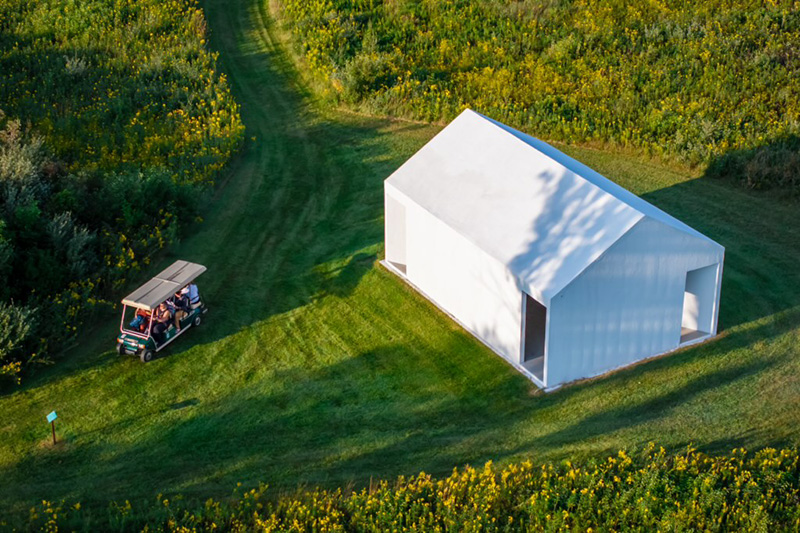
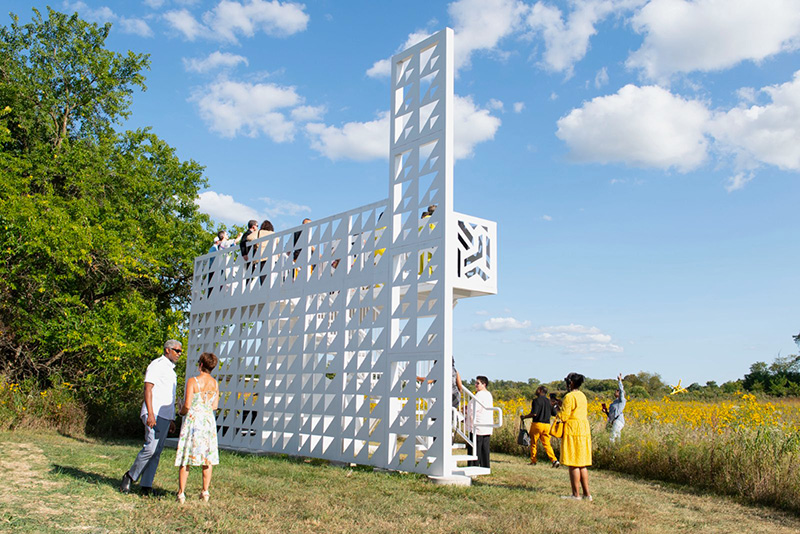
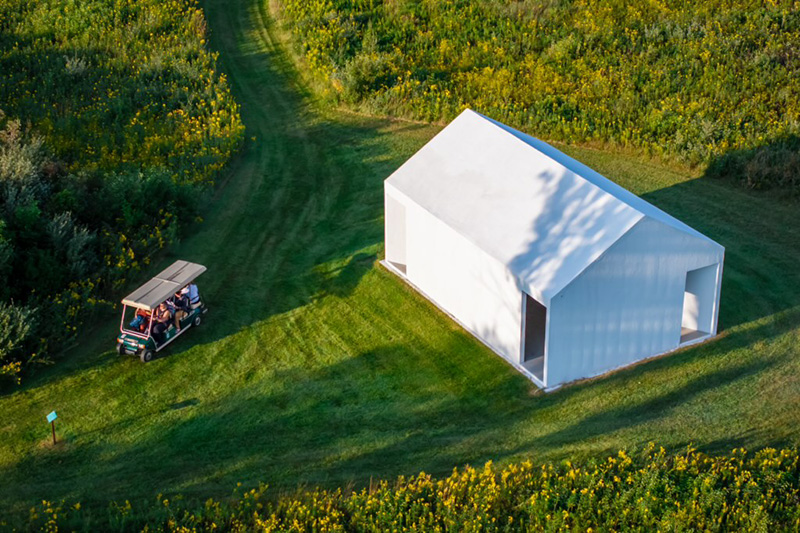
Bernard Williams's Avian Station is one of theNate's newest collection additions.
By SUSAN GESCHEIDLE
Photos by GUY RHODES
Fall kicks off the gallery art scene and a busy season of fundraising galas. Whether formal or informal, these events support vital causes. The arts always need support, and the Chicago area and vicinity are notoriously generous. On this night, I headed to the Nathan Manilow Sculpture Park for their annual Prairie Party.
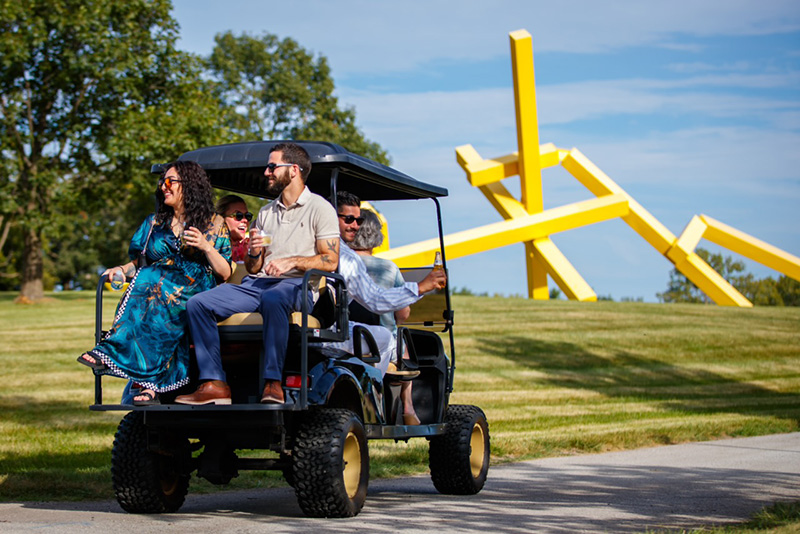
I arrived on the Governors State University campus during the golden hour of a warm September evening. The Prairie Party supported the park—popularly called the Nate—celebrating art, education, conservation, and a deep connection to place. Guests mingled outdoors with cocktails as a fleet of golf carts rolled out for tours. Jumping into a cart with a signature “Prairie Sunset” drink in hand and zipping around with a jittery student volunteer driver made for a fun, bumpy adventure and a quick way to see the art.
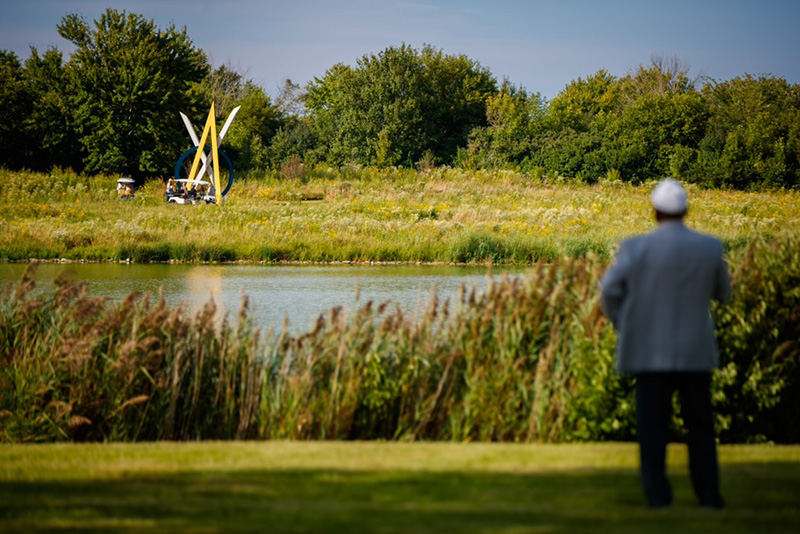
Covering a small portion of the park's collection, our ride took us past some of the 34 sculptures scattered across 100 acres. Highlights included Terry Karpowicz’s Stargazing with Contrails, Bruce Nauman’s House Divided, and Tony Tasset’s Paul. The latter is a towering, 30-foot fiberglass lumberjack who looks completely dejected, slumped over, and hilariously questioning his life choices—a personal favorite. Now a fan of golf cart tours. Kudos to the Nate!
Since the tour skipped the park's newest sculpture, Avian Station (2023) by longtime friend and South Side artist Bernard Williams, I twisted my driver's arm for a detour. It's art! It's an interactive painted steel structure! It's a lookout! Its pristine white finish displays the "Birds in Flight" quilting pattern of the Quilts of Gee's Bend alongside Native American and Chinese cultural shapes. Running up the steps gave me a perfect view of the 12-acre Butterfly Ranch prairie restoration. As a bird lover, I loved the avian theme and can imagine birds landing on the sculpture to enjoy it too. Definitely a nice addition to the Nate.
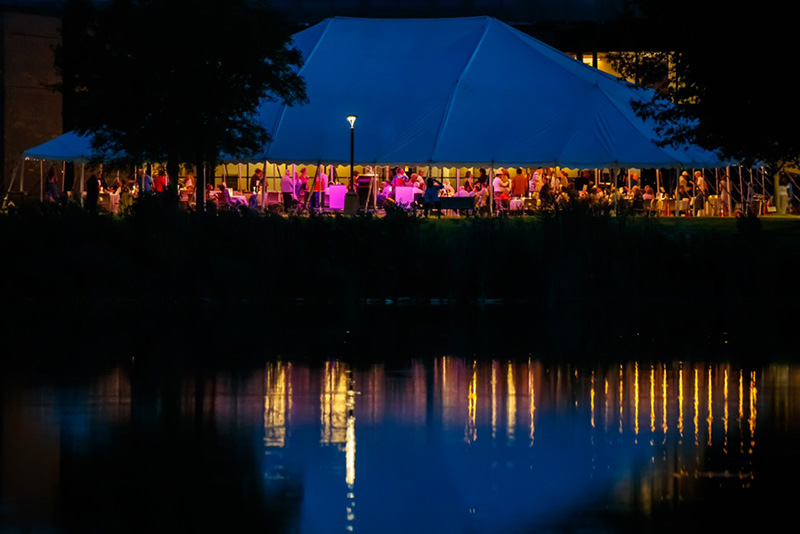
Jazz, drinks, and light bites welcomed guests back to the patio for opening remarks by GovState President Dr. Joyce Ester and Jeff Stevenson, the park and gallery's Director and Curator. Stevenson, a local artist and educator, has managed the park's collection and gallery exhibitions since 2017. The Visual Arts Gallery remained open for the solo exhibition Robert Burnier: Blind Histories, showcasing his beautifully colored, airbrushed, complex wall-mounted sculptures that resemble crumpled paper and color-field paintings.
Next up was a classic barbecue buffet. Over a tasty spread from Drew’s BBQ, the presentations highlighted the Nate’s mission, sharing thank-yous to the artists, supporters, and sponsors before wrapping up the night with a paddle raise for their programs.
This gathering of the art community shows why this "museum-in-the-prairie" is a regional treasure. Long before campus buildings were constructed, the Manilow family owned this land, and in the late 1960s, philanthropist Lewis Manilow loaned a farmhouse on the property to master sculptor Mark di Suvero. Di Suvero used a nearby barn as his studio to build massive pieces, including Yes! For Lady Day, the very first sculpture on the grounds. That foundation started a public art legacy that led GovState to name the park in 1978 to honor Lewis's father, developer Nathan Manilow. Over the years, the collection grew to include pieces like Hand Heart by the late, great Chicago artist and designer Jason Pickleman, who designed the park's iconic logo.
Much of the magic of the Nate comes down to its setting, and it is easy to see why it was voted the Best Sculpture Park in America in USA Today's 2021 Readers' Choice Awards. Walking in nature is key to the whole experience. There is something so special about turning a corner and being face to face with a majestic sculpture standing out in the middle of a massive, beautiful stretch of open prairie land.
Open and free to everyone, the park gives campus students the privilege of walking the grounds while welcoming people from all walks of life, whether they are out for a solo stroll, walking a dog, or exploring with family. The unique variety of shapes, styles, and materials of the sculptures makes every turn interesting—whether you are passing the domed industrial grid of Christine Tarkowski’s Working on the Failed Utopia, the soaring red steel beams of Edvins Strautmanis's Phoenix, or the UFO-shaped black concrete Flying Saucer by Jene Highstein, just to name a few. Get your walking shoes on and go check it out!
#
Visit govst.edu/theNate for details about the collection